

Commercial Bumper Boat Repeat Order Case Study: From 10 to 20 Boats in a Jinan Scenic Area
A family scenic area in Jinan first ordered 10 QIQU commercial PE bumper boats in July 2024. After real holiday operation showed strong visitor demand, long queues and heavy all-day usage under an all-inclusive ticket model, the operator reordered twice before major holiday seasons and expanded the fleet to 20 boats. The final batch was upgraded to lithium batteries for longer daily operation.
Emily
Founder of QIQU
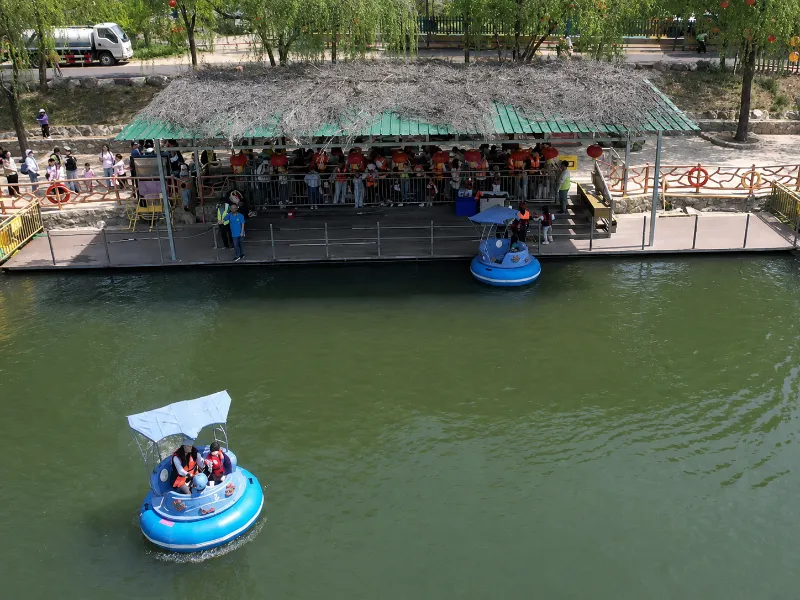
This case is not about a single successful delivery. It is about what happened after the boats entered real holiday operation.
In July 2024, a family scenic area in Jinan, Shandong ordered 10 QIQU commercial PE bumper boats for an artificial lake of more than 3,000 m², with an average water depth of about 1.8 m. The operator later reordered twice and expanded the fleet to 20 boats.
The reason was simple: during peak holidays, the first fleet was not enough.
For amusement operators, repeat orders are more useful than compliments. A customer may praise a product when it arrives. A customer only reorders after the attraction has survived real visitors, real queues, real charging pressure and real daily operation.
The First Question Was Not “How Much?” It Was “How Many Boats Can This Lake Hold?”
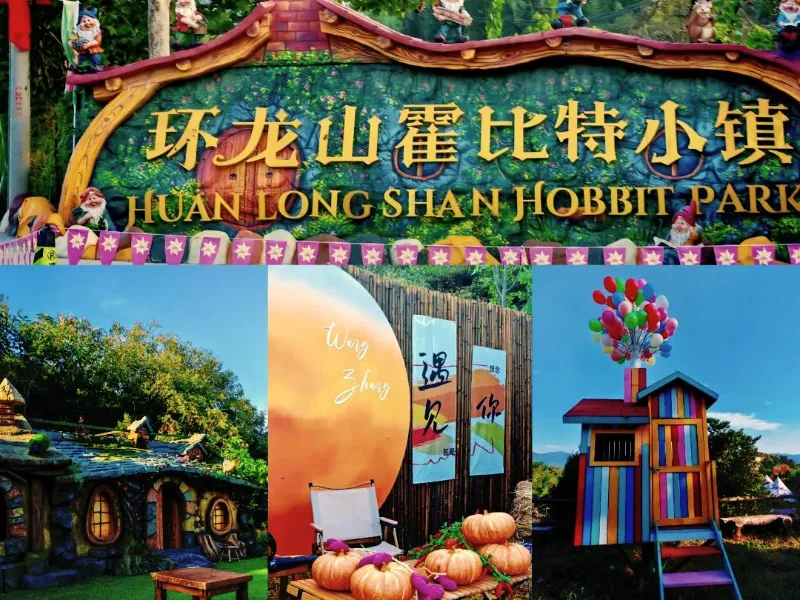
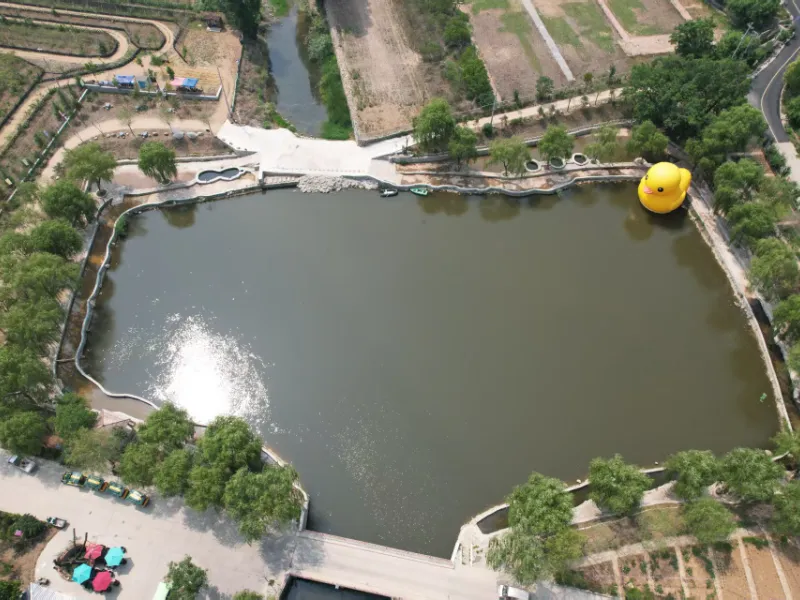 The customer first contacted QIQU on June 14, 2024. Their site had a large artificial lake, and the practical question was how many bumper boats would make sense for the water area.
From a purely physical layout point of view, a 3,000 m² lake could hold far more than 10 boats. But maximum capacity is not the same as the right starting point.
For a new commercial bumper boat project, we normally look at several factors before recommending a fleet size:
- usable water area, not only total lake area
- average water depth and shoreline shape
- expected holiday visitor volume
- staff and rescue arrangement
- charging area and power capacity
- whether the attraction is sold separately or included in a ticket package
- how quickly the operator wants to test the market
For this project, QIQU recommended starting with 10 to 20 boats instead of filling the lake from day one. That gave the operator enough capacity to launch the attraction, control risk and use real visitor behavior to decide the next purchase.
The first order was confirmed on July 5, 2024: 10 commercial PE bumper boats in three colors, with matching solid-color protective collars. The boats were shipped on July 15, arrived on July 16, and were installed on July 17 after rain delayed the site setup by one day.
The First Fleet Proved Demand, Then Holiday Queues Created the Next Order
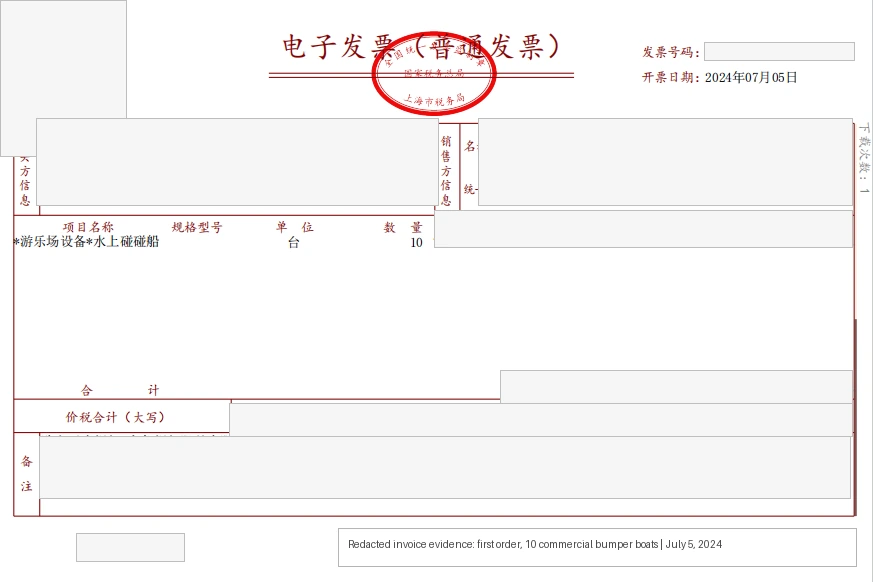
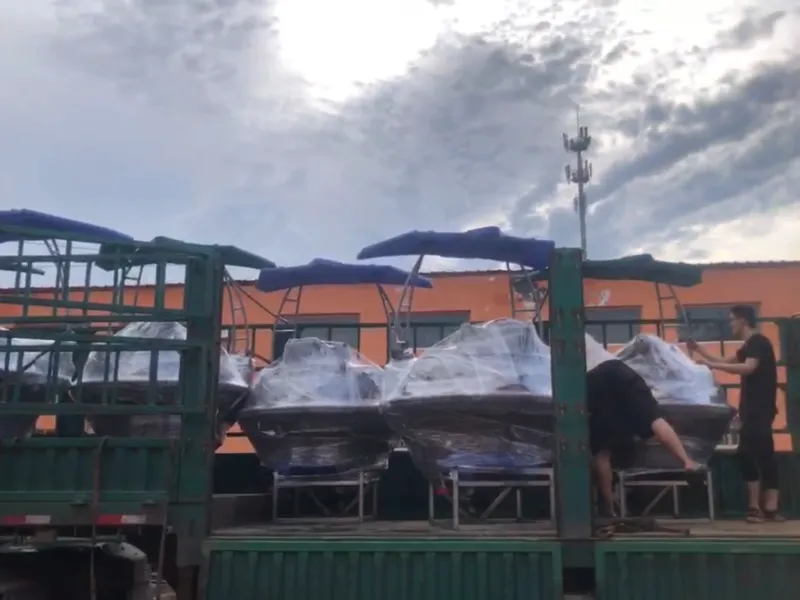 The first order was documented with both the July 5, 2024 invoice and a shipment video frame; the loading image is not studio-clear, but it preserves the real delivery record behind the initial 10-boat purchase.
The first batch entered operation during the summer season. According to the customer’s feedback, visitors liked the bumper boats, and the boats became one of the visible water attractions inside the scenic area.
The important point is not that the boats looked attractive in photos. The important point is that they created enough demand to expose a capacity problem.
By September 2024, the operator was preparing for China’s National Day holiday, one of the busiest travel periods of the year. They told us the boats were not enough during busy periods and ordered four more units.
The second order was paid on September 26, shipped on September 27, and arrived on September 28 because we had suitable stock available at that time. This batch added two yellow boats and two blue boats, with striped protective collars to bring more visual variation to the water area.
If your project priority is custom colors and visual matching for a resort-style lake attraction, see the Luxe Island custom bumper boat case study.
That timing matters. Operators do not expand a fleet before a major holiday unless the first fleet has already shown commercial value.
Why the All-Inclusive Ticket Model Changed the Equipment Load
This project is different from many pay-per-ride bumper boat operations.
In some venues, visitors pay for each boat session. They may ride once, take photos, and move to the next attraction. In this Jinan scenic area, bumper boats were included as part of a broader ticket package with multiple attractions.
That creates a different operating pattern.
When visitors have already paid for an all-inclusive ticket, many will try to “get their value back” by riding popular attractions more than once. For the operator, this can be good: the venue looks active, queues create visible popularity, and families stay longer. For the equipment, it means higher pressure.
The boats may run almost continuously on busy days. Batteries are drained faster. Staff must rotate boats more carefully. Charging schedules become part of the business model, not a small technical detail.
This is why the customer kept mentioning battery endurance after the first two batches.
Battery Endurance Became the Real Operating Lesson
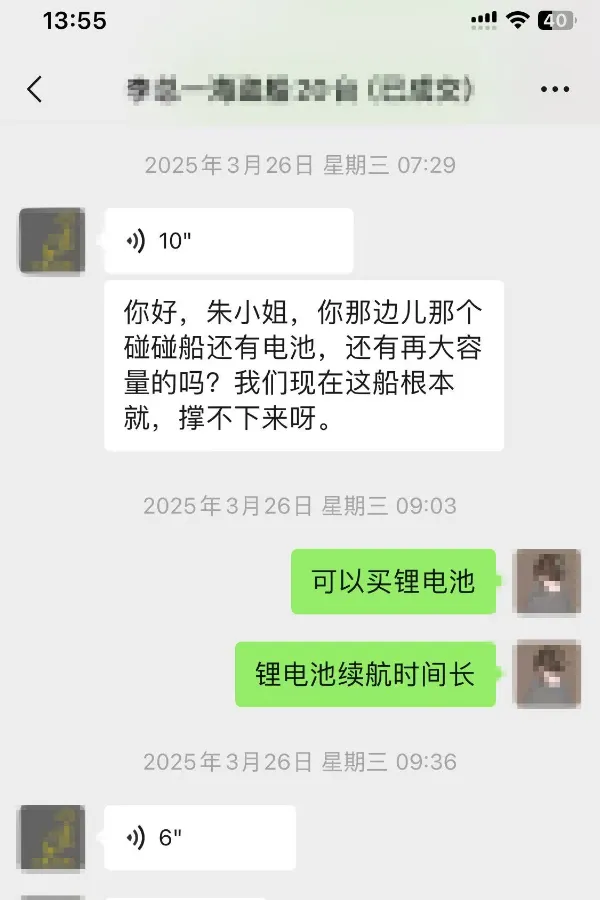 Redacted March 2025 WeChat record: after heavy holiday operation, the customer reported that the original lead-acid batteries could not keep up with all-day repeat rides, so QIQU recommended a lithium battery upgrade for the next order.
The first 10 boats used two 12V 80Ah lead-acid batteries per boat. That configuration can work for many standard operations, especially when rides are sold in controlled sessions and the daily traffic is moderate.
But this site had a heavier use pattern. During holidays, visitors repeatedly queued and rode again. The boats were not sitting idle for long periods.
For the second batch, the customer moved to two 12V 120Ah lead-acid batteries. That improved capacity, but the operator still felt battery endurance was under pressure during high-traffic days.
When the third order came in March 2025, QIQU recommended a lithium battery upgrade. The customer paid on March 27 to reserve production before the May Day holiday rush, requested delayed shipment, and the six boats were shipped on April 21 and arrived on April 22.
The third batch included green, brown and blue boats with matching solid-color protective collars. After this lithium battery upgrade, the customer did not continue raising the same battery complaint.
This is the real value of a repeat-purchase case: it shows what the project taught both sides. The first order proved demand. The second order solved short-term holiday capacity. The third order improved endurance for a high-frequency operating model.
For buyers comparing lead-acid and lithium battery options, QIQU can match the commercial PE bumper boat configuration to the expected ride duration, charging schedule and peak-season traffic.
A 20-Boat Fleet Was Built Step by Step, Not Guessed on Paper
By April 2025, the customer’s fleet had expanded from 10 boats to 20 boats through three purchases:
| Order | Date Paid | Quantity | Main Purpose | Key Change |
|---|---|---|---|---|
| First order | July 5, 2024 | 10 boats | Launch the attraction | 3 yellow, 3 blue, 4 green; matching solid-color collars |
| Second order | September 26, 2024 | 4 boats | Prepare for National Day holiday traffic | Added capacity and striped collars |
| Third order | March 27, 2025 | 6 boats | Prepare for May Day holiday traffic | Upgraded to lithium batteries |
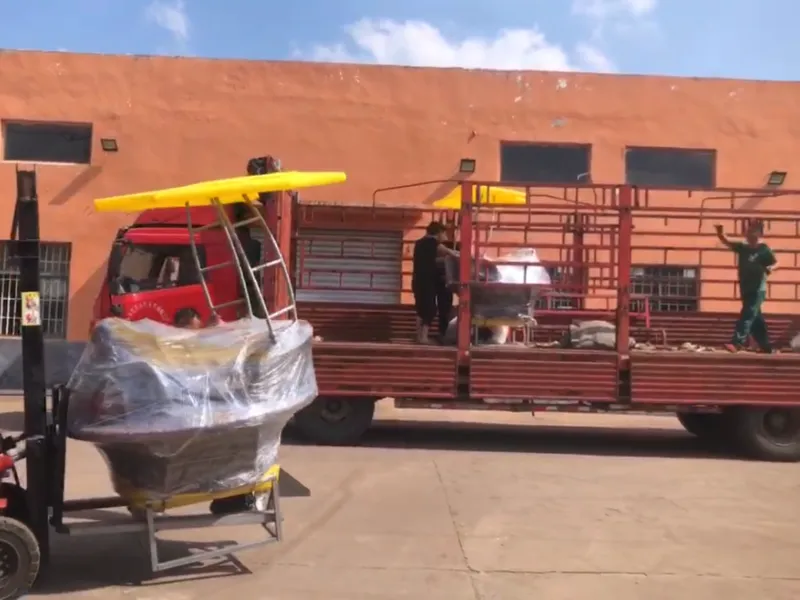
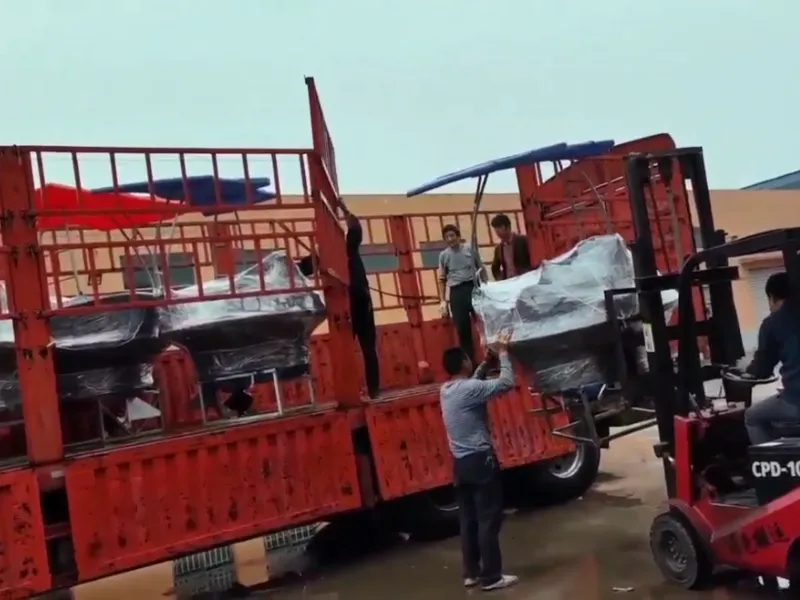
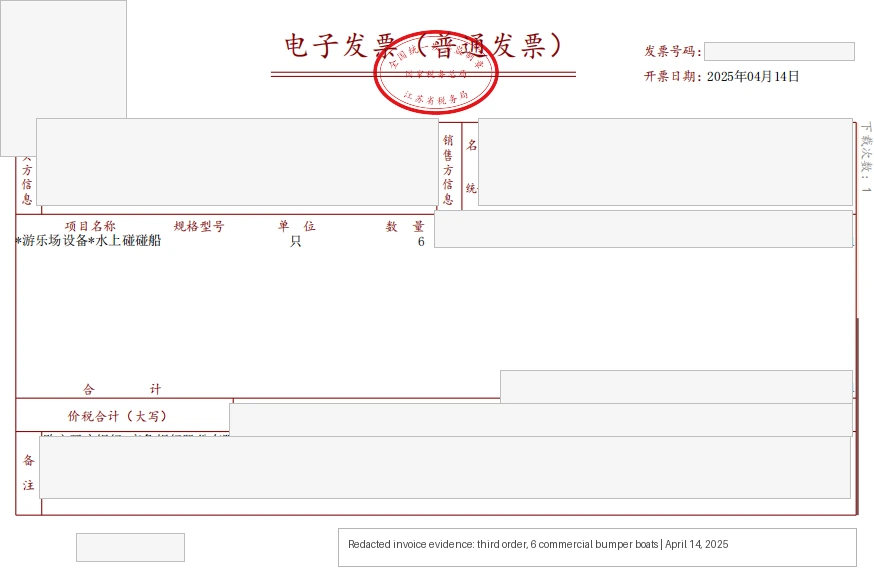 For the later repeat orders, we kept the shipment records from the second and third deliveries, together with the redacted invoice for the third 6-boat order; the second invoice is not shown here, but the delivery record and full internal order file remain available for verification during serious buyer discussions.
This step-by-step expansion is often healthier than buying a large fleet blindly.
For scenic areas, resorts and lake operators, the question should not be “What is the maximum number of boats I can fit?” The better question is:
How many boats can my site operate profitably, charge reliably and manage safely during peak traffic?
That is the difference between buying equipment and planning an attraction.
What Other Operators Can Learn From This Case
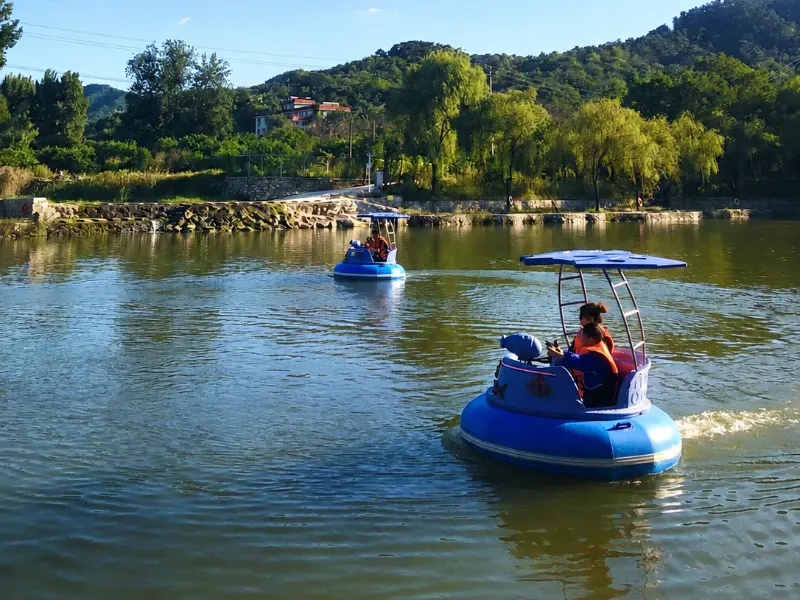
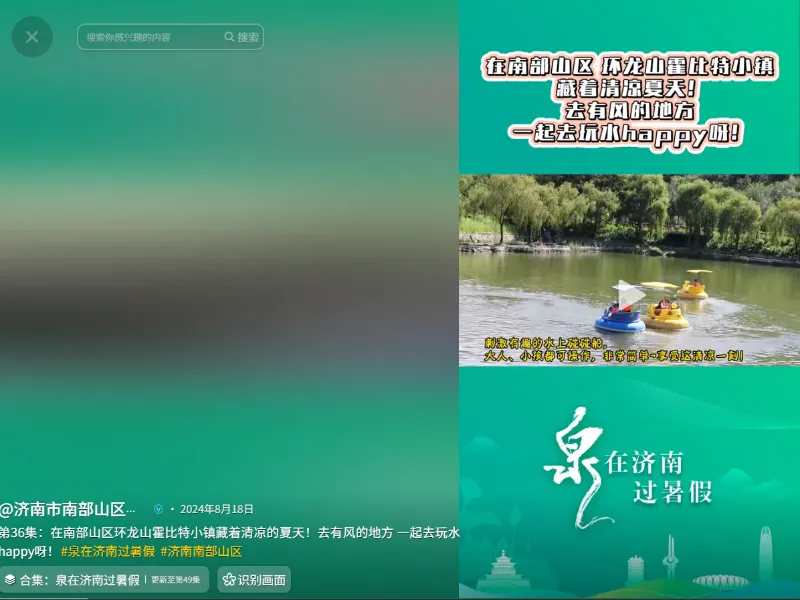 The Huanlongshan bumper boat attraction also appeared in a public short video from Jinan's local culture and tourism promotion account on August 18, 2024, as part of a summer water-play recommendation for visitors in southern Jinan. QIQU treats this as public tourism-promotion evidence for the operating attraction, not as an official endorsement of QIQU as a supplier. For overseas buyers, the value is simple: after installation and operation, the bumper boats became visible enough to appear in local visitor-facing tourism content.
This project gives a practical reference for buyers planning commercial bumper boats for artificial lakes, resorts, family scenic areas or outdoor water attractions.
First, start with a fleet size that matches your first season. A large lake does not always require a large first order. If your site is new to bumper boats, 10 to 20 boats can be a controlled way to test visitor demand, staff flow and charging capacity.
Second, match the battery configuration to the ticket model. A pay-per-ride operation and an all-inclusive ticket operation can put very different pressure on the same boat. If visitors can ride repeatedly throughout the day, battery endurance should be discussed early.
Third, plan around holidays before they arrive. This customer reordered before National Day and May Day because peak periods are when capacity limits become obvious. For seasonal attractions, late ordering can cost more than the equipment itself if the boats miss the holiday window.
Fourth, use real operation to refine the next order. The second and third purchases were not copies of the first one. The customer adjusted colors, collar style and battery configuration based on what they learned from the site.
That is how commercial amusement equipment should be purchased: not as decoration, but as an operating asset.
If your main question is which boat model fits a lake, riverbank or still-water area, read the Malaysia bumper boat model selection case study.
What QIQU Needs Before Recommending a Fleet
If you are planning a bumper boat project, QIQU can give a more useful recommendation when you provide the following details:
- country and project location
- lake, pond, pool or artificial water area
- usable water size and average depth
- expected daily and holiday visitor volume
- ticket model: pay-per-ride, timed session or all-inclusive pass
- preferred ride duration
- charging area and local power condition
- target opening date
- whether you need lead-acid or lithium battery options
- preferred colors, logo and visual style
We do not recommend choosing only by price or by the largest possible number of boats. A commercial bumper boat project works better when the fleet size, battery system, water area and visitor flow are planned together.
For serious buyers, QIQU can also share additional records from this project, including production photos, delivery records, installation feedback and order timeline evidence, with sensitive customer information removed where needed.
If you are planning a lake attraction, family resort water ride or scenic-area bumper boat fleet, For boat structure, battery options, bumper collar design and standard specifications, review QIQU's commercial PE bumper boats product page.
If your venue does not have an existing lake or pool, the Peru support-frame pool bumper boat case study shows how QIQU planned bumper boats with a support-frame pool.
Frequently Asked Questions
Everything you need to know about this product. Can’t find what you’re looking for? Contact our team.
- The theoretical number can be much higher than the practical starting quantity. For this project, the lake area was over 3,000 m² with an average depth of about 1.8 m. While the site could physically support a larger fleet, QIQU recommended starting with 10 to 20 boats first, so the operator could test real traffic, staffing, charging capacity, queue flow and holiday demand before scaling up.
- The repeat orders were driven by real operation, not by a catalog decision. After the first 10 boats entered service, the operator saw strong visitor demand and long holiday queues. Four more boats were added before the National Day holiday in 2024, and six more were ordered before the May Day holiday in 2025. This is the kind of buying behavior we value most: the customer expanded only after the attraction proved itself on site.
- Yes, but it changes the operating logic. In an all-inclusive scenic area, visitors often ride repeatedly because the attraction is already included in the ticket. That can make the bumper boats look busy all day, which helps the venue create visible popularity, but it also puts more pressure on batteries, charging schedules and daily maintenance. For this type of operation, fleet size and battery configuration should be planned more carefully than a pay-per-ride project.
- Lead-acid batteries can work for normal traffic, shorter sessions or tighter budgets. For high-traffic scenic areas, holiday operation or all-inclusive ticket models, lithium batteries are usually a better long-term choice because the boats may run almost continuously during peak days. In this case, the first batches used lead-acid batteries, but the final reorder was upgraded to lithium after real operation showed a need for longer endurance.
- Send your water area, average water depth, expected visitor volume, operating hours, ride duration, ticket model, peak season dates, charging area and whether the boats will be charged per ride or included in a larger ticket package. These details matter more than asking for a fixed boat count, because two venues with the same lake size can need very different fleet plans.
- They can, especially in family scenic areas, resorts and lake attractions where visitors need an activity that is easy to understand and quick to join. Bumper boats are visual from the shore, simple for parents and children to operate, and easy to rotate in short sessions. In an all-inclusive venue, repeated riding can also create a steady queue, which makes the attraction look active and helps support the overall visitor experience.
- Do not plan only for average weekdays. Holiday traffic is where many operators discover that the original fleet is too small. This case is a good example: the customer expanded before National Day and again before May Day because peak-period demand was higher than the first fleet could comfortably handle. If your venue depends heavily on holiday revenue, reserve production and shipping time early.
- Yes. For serious B2B buyers, QIQU can share additional project records such as communication history, production photos, packing photos, delivery records and installation feedback, with sensitive customer information removed when needed. This helps buyers evaluate the case as a real commercial operation rather than a simple product photo.
Ready to Apply These Strategies?
Get a custom ROI projection and layout plan for your specific project.
Request a Free ConsultationRelated Articles
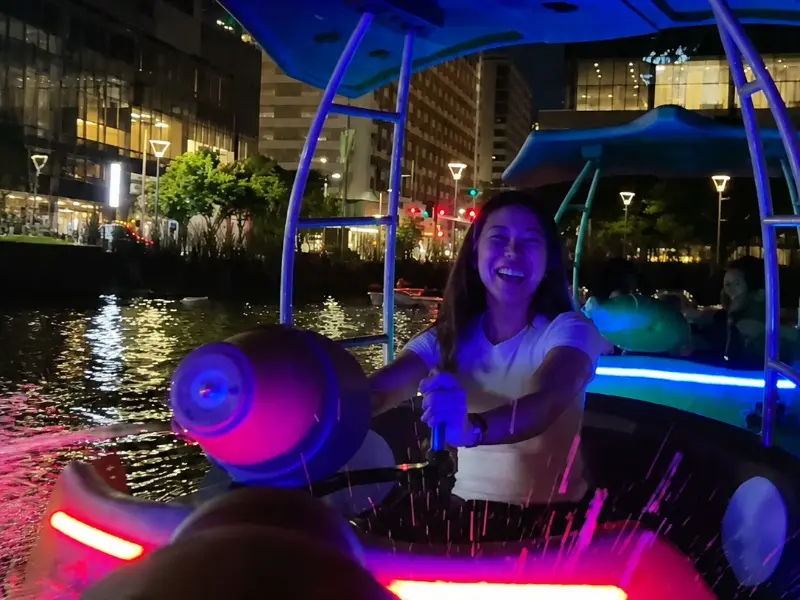
Houston Commercial Bumper Boat Case Study: How QIQU Turned a City Lake into a Viral Water Attraction
A deep commercial bumper boat case study from Houston, Texas. See how QIQU self-developed bumper boats became a viral urban water attraction at Discovery Green, gained coverage from local TV, newspaper, city guides, travel platforms and hotel event pages, generated 10M+ combined social media engagements, and proved real visitor demand in a U.S. park operation.
Read more
About QIQU: The Engineering Truth Behind How We Build Amusement Parks
QIQU is an amusement engineering company evolving from commercial inflatable systems to PE rotomolded park infrastructure. Built from real factory and park operations since 2012, we design amusement equipment based on real-world operational experience, not theory.
Read more