

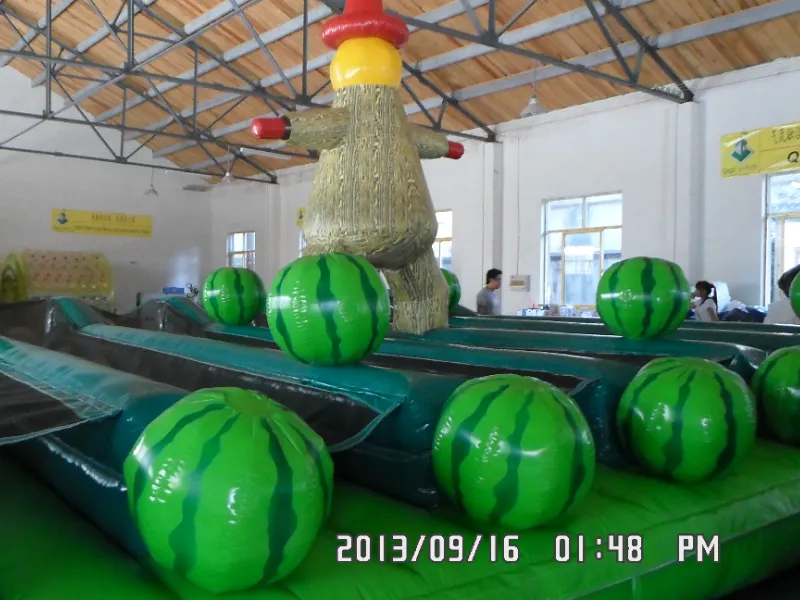
Custom Commercial Inflatable Obstacle Course
Custom-built obstacle courses for commercial rentals, competitive events, and large-scale attractions.
Custom commercial inflatable obstacle courses combining climbing challenges, crawl-throughs, balance obstacles, and large slides in a continuous route designed around your venue, audience, and event requirements.
Product Overview
Factory-direct commercial rides built for profit.
A Custom Inflatable Obstacle Course for Commercial Events
A commercial inflatable obstacle course brings multiple physical challenges together in one continuous attraction. Instead of focusing on free-play bouncing, participants move through a sequence of obstacles that may include climbing walls, crawl-through sections, balance challenges, rolling elements, and large inflatable slides.
QIQU designs custom commercial inflatable obstacle courses for rental companies, event organizers, amusement parks, shopping centers, resorts, schools, and other operators looking for an interactive group activity.
Each project is developed around the available site, target audience, preferred challenge level, and intended operating model.
Designed Around Your Course Layout
Every venue has different space limitations and operational requirements. QIQU can customize the course length, width, height, number of lanes, obstacle selection, and route layout to suit the project.
Depending on the design, the course can follow a straight route, a U-shaped layout, or another configuration developed for the available space. Obstacle modules can also be arranged in a different sequence to create a specific challenge or finish.
Our previous projects include large multi-obstacle installations assembled from separately manufactured sections. We have experience producing different obstacle types and developing layouts for commercial use.
For operators, this means the course can be planned around the attraction they want to run rather than being restricted to a single standard model.
Create a Challenge That Matches Your Audience
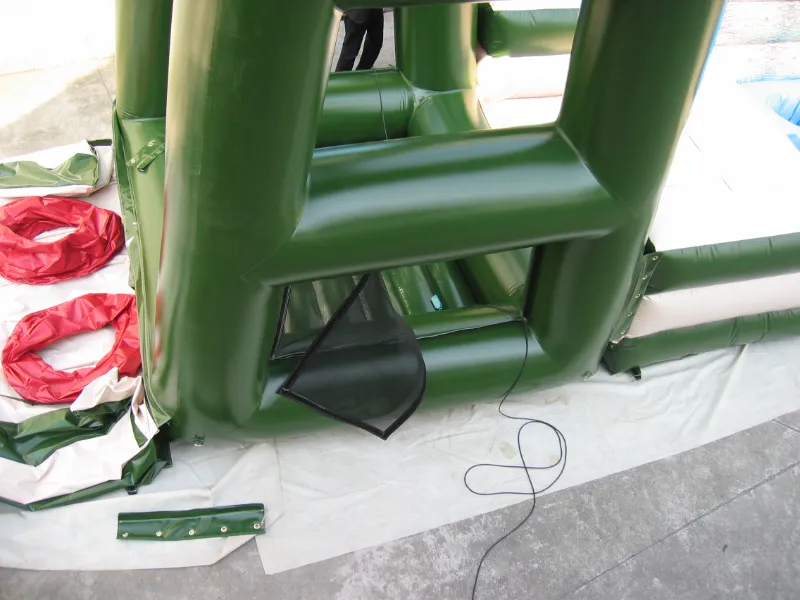 The difficulty of an obstacle course depends on more than its overall length. Climbing height, obstacle spacing, passage width, physical challenges, and the position of the final slide all influence the experience.
A course for children's activities can emphasize accessible climbing, crawling, and coordination challenges. A course intended for teenagers, adult participants, team competitions, or corporate events can be designed around more demanding physical tasks and competitive play.
QIQU can adjust the obstacle combination and difficulty level to suit your intended users. Final age, weight, participant-capacity, and operating limits should be confirmed for the specific design.
Modular Construction for Large Projects
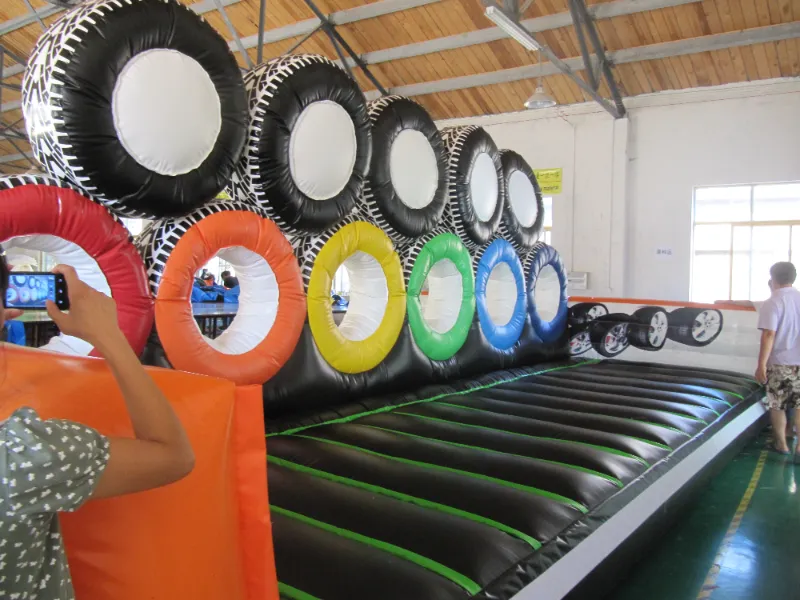 Large obstacle courses can be manufactured as multiple independently inflated modules and connected into one continuous route.
This approach allows each section to be produced, inspected, deflated, folded, and packed separately. It can also make handling and seasonal storage more manageable than treating the entire course as one oversized unit.
Depending on the layout, module connections may use zippers, hook-and-loop fasteners, D-rings, and connector straps. The connection details are selected according to the structure and requirements of the project.
Each module is designed with its own inflation requirements. Blower quantity and power depend on module size and configuration, with larger sections potentially requiring more than one blower.
Commercial Materials and Reinforced Construction
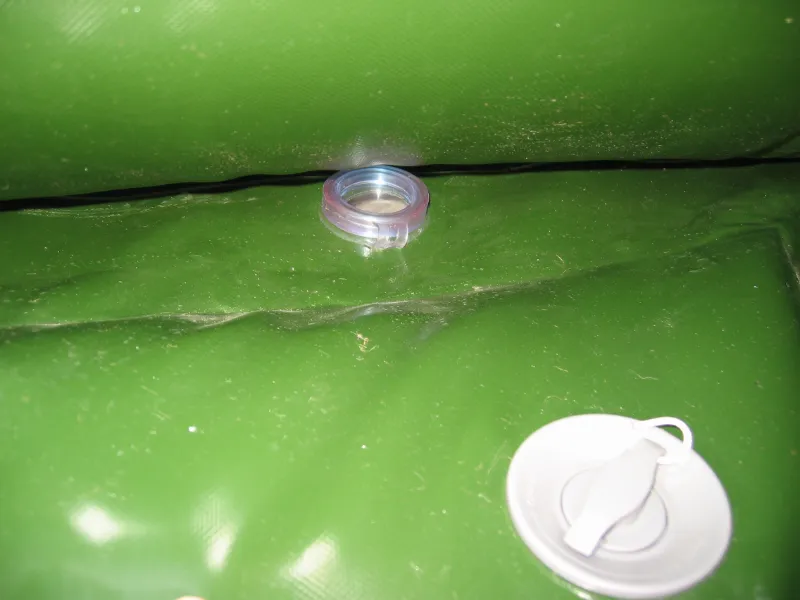 QIQU uses 0.55 mm Sijia commercial PVC-coated fabric for this product category.
High-frequency heat welding is the primary joining method, while reinforced stitching is used in designated areas where the design requires it. Climbing sections use reinforced webbing, and other high-stress areas receive additional reinforcement according to their intended function.
Material selection is only one part of the manufacturing process. The layout, connection points, climbing structures, anchoring positions, and module interfaces also need to be considered during design and production.
Available material test reports can be supplied for review. Their scope should be assessed against the specific material and tests identified in each report.
Installation and Site Preparation
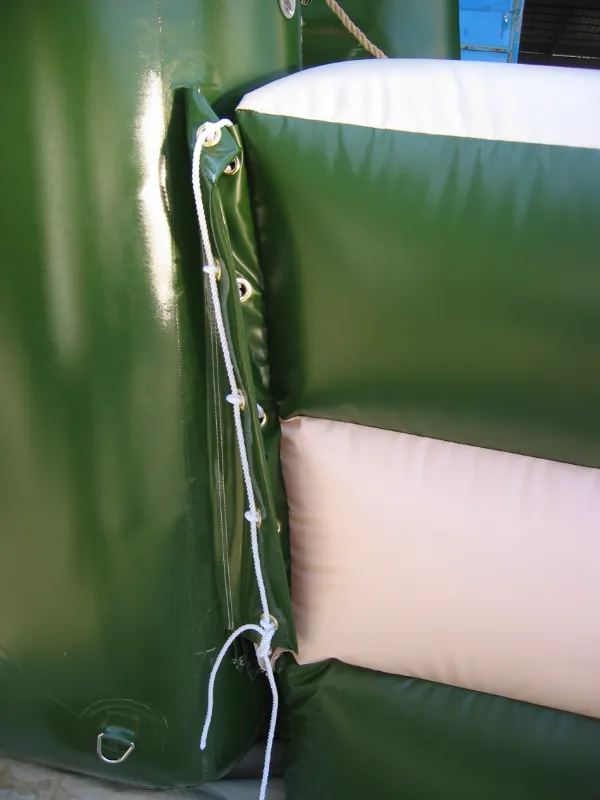 Before installation, the operator should prepare a suitable site and check the entire area for sharp stones, branches, broken glass, debris, and other hazards.
A protective ground tarp is required on every surface, including grass. Concrete, asphalt, and indoor flooring may be considered where the surface protection, available space, and anchoring or ballast arrangements are appropriate.
The ground slope must not exceed 5%. Adequate clearance must be maintained around the course, especially beside the obstacles and beyond the exit. Overhead obstructions and unsuitable anchoring conditions must be addressed before setup.
For a reference 50 m course, an installation team of approximately three to four people may complete the initial layout and inflation in around 30–45 minutes. Actual time depends on the module count, course design, site conditions, and final safety checks.
Plan for Safe Commercial Operation
A commercial obstacle course requires active supervision. Operators should control entry, manage participant spacing, monitor climbing and sliding sections, and ensure that exit areas remain clear.
Participant capacity and operating restrictions must be established for the actual configuration rather than assumed from the course length alone. Staff should be trained to respond to emergencies and follow the supplied operating instructions.
As a general operating recommendation, stop use in rain or when wind reaches Beaufort Force 5 or above. The final operating plan should also comply with applicable local requirements.
Custom Design, Production, and Delivery
QIQU can customize course dimensions, obstacle combinations, lane arrangements, colors, logos, printed graphics, themes, and other design details.
For complex projects, a 3D design may be prepared after the requirements have been discussed. A design fee may apply, with credit or refund arrangements agreed for qualifying bulk orders.
For a reference 50 m configuration, the production lead time is approximately 30 days after the deposit is received and the final design, dimensions, and configuration are approved.
The standard package includes blowers, a repair kit, storage bags, and user instructions. Ground stakes, ropes, ballast sandbags, timing equipment, and other additional items should be confirmed separately.
Before shipment, the modules are checked according to the production and inspection plan, inflated for inspection where appropriate, and photographed for customer confirmation.
Choose the Right Inflatable Attraction for Your Business
Different inflatable attractions serve different commercial purposes.
If your project is built around timed challenges, physical competition, and a continuous route through multiple obstacles, a custom commercial inflatable obstacle course is a suitable format to consider.
If you are looking for a more open-ended play area for younger children, explore our Custom Commercial Inflatable Bounce House Combos.
If your concept is centered on a long, ground-level water-sliding attraction rather than a sequence of physical obstacles, see our Commercial Inflatable City Water Slide.
Share your venue dimensions, target audience, preferred obstacle types, estimated budget, and intended operating model with QIQU. We can review your requirements and develop a course configuration for your project.
Specifications & Parameters
Detailed technical data and product parameters to help you plan your installation.
Technical Specifications
| Product Type | Custom Commercial Inflatable Obstacle Course |
| Design | Fully customized multi-obstacle course |
| Course Layout | Straight, U-shaped, multi-lane, or other project-specific configurations |
| Obstacle Selection | Climbing walls, crawl-through sections, balance obstacles, rolling elements, inflatable slides, and other custom-designed challenges |
| Recommended Course Configuration | At least 4 independent modules or approximately 6 core obstacle zones for a more complete playing experience |
| Minimum Order Quantity | 1 module; a complete multi-obstacle course is recommended for commercial operation |
| Main Material | 0.55 mm Sijia commercial PVC-coated fabric |
| Construction Method | High-frequency heat welding as the primary joining method, with reinforced stitching in designated areas |
| Reinforcement | Reinforced webbing in climbing areas, connection points, anchoring points, and other high-stress sections |
| Module Structure | Independently inflated modules with project-specific connection systems |
| Module Connections | Zippers, hook-and-loop fasteners, D-rings, and connector straps, according to the approved design |
| Blower Configuration | Typically 1 blower per module; larger modules may require 2 or more blowers |
| Blower Power Options | 1,100 W, 1,500 W, or 2,200 W, depending on module dimensions and design |
| Voltage and Plug | Configurable for 110 V or 220 V and the destination market |
| Reference Installation Time | Approximately 30–45 minutes for a 50 m course with 3–4 people, depending on the configuration and site conditions |
| Reference Production Lead Time | Approximately 30 days for a 50 m course, starting after the deposit is received and the design, dimensions, and configuration are finalized |
| Included Accessories | Blowers, repair kit, storage bags, and user instructions |
| Not Included as Standard | Ground stakes, ropes, ballast sandbags, spare accessories, and timing equipment |
| Warranty | 1 year for the complete equipment and blowers, subject to the agreed warranty terms |
| After-Sales Support | Repair materials, spare parts availability, and video repair guidance |
| Site Requirements | A ground tarp is required on all surfaces, including grass. The site must be inspected, and the ground slope must not exceed 5% |
| Operating Conditions | Continuous inflation is required during operation. Stop operation in rain or when wind reaches Beaufort Force 5 or above |
| Safety Guidance | Recommended minimum age is 6 years; children below 91 cm in height are not recommended to participate. A 100 kg maximum participant weight is a general operating recommendation, subject to confirmation for the final design |
| Customization Options | Course length, width, height, obstacle sequence, number of lanes, colors, themes, logos, graphics, and module configuration |
Frequently Asked Questions
Quick answers to the most common questions about this product.
- Yes. QIQU can customize the course layout, dimensions, obstacle types, obstacle sequence, colors, graphics, themes, and lane arrangements according to your venue, budget, and intended use.
- Yes. Individual modules can be ordered separately. However, we generally recommend at least four modules or approximately six core obstacle zones for a more engaging commercial obstacle-course experience.
- The number depends on the course layout, number of lanes, obstacle design, and operating plan. One previous project was designed for up to six participants to compete simultaneously. The permitted capacity for your project will be confirmed during the design stage.
- For a reference 50 m course, approximately 3–4 people can complete the initial layout and inflation in around 30–45 minutes. Larger or more complex configurations may require additional time. Site preparation, anchoring, safety checks, and final connections must also be completed before opening.
- Grass is generally preferred, but a suitable installation may also be possible on concrete, asphalt, or indoor flooring. A protective ground tarp must be used on every surface. The site must be level within the permitted 5% slope, free of sharp objects, and suitable for the planned anchoring or ballast system.
- The main material is 0.55 mm Sijia commercial PVC-coated fabric. High-frequency heat welding is the primary joining method, with reinforced stitching used where required. Climbing areas, connection points, and other high-stress sections receive appropriate reinforcement based on the design.
- The connection method depends on the course configuration and may include zippers, hook-and-loop fasteners, D-rings, and connector straps. Each module is inflated independently, and the connection arrangement is confirmed during project design.
- A module typically uses one blower, while a particularly large module may require two or more. Blower power and quantity are selected according to the dimensions, internal air chambers, and design of each module. Voltage and plugs can be configured for the destination market.
- The course can be designed for different audiences, including children, teenagers, and adults. Obstacle heights, climbing difficulty, and challenge intensity should be matched to the intended users. The final design and user instructions must specify the applicable age, height, weight, and operating restrictions.
- A trained operating team must control entry, monitor the course, manage participant spacing, and keep the exit clear. Ground protection, anchoring, and equipment checks are required before use. Stop operation in rain or at Beaufort Force 5 winds or above, and follow the final operating instructions and applicable local requirements.
- Available test reports for the relevant PVC materials can be provided for review. Each report applies to the specific material sample and tests identified in that document; it should not be interpreted as certification of the complete custom obstacle course.
- For a reference 50 m configuration, production takes approximately 30 days after the deposit is received and the final design, dimensions, and configuration have been approved. More complex projects may require a different schedule.
- A design fee may be requested for complex custom layouts. For qualifying bulk orders, the fee is generally credited or refunded according to the agreed terms.
- The standard package includes the blowers, repair kit, storage bags, and user instructions. Ground stakes, ropes, ballast sandbags, timing equipment, and other additional accessories should be confirmed separately.
- The standard warranty is one year for the equipment and blowers, subject to the agreed terms. Repair materials, spare parts availability, and video repair guidance are also provided as part of the after-sales support arrangement.
- It can support paid rentals, ticketed events, team-building activities, and seasonal attractions, but profitability depends on local demand, pricing, utilization, labor, transport, and operating costs. We recommend evaluating these factors using your own venue and business model rather than relying on a universal payback estimate.
More from Commercial Custom Inflatables
Explore similar attractions in the same category.
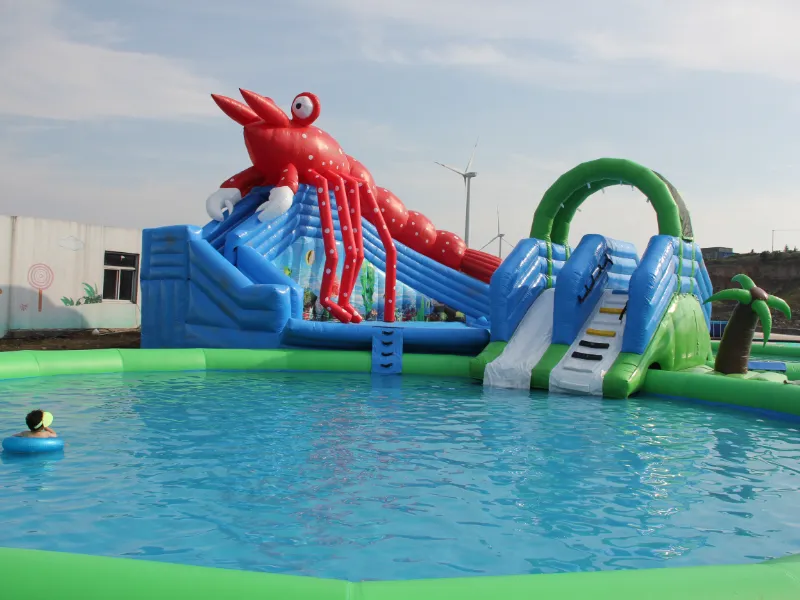
Custom Commercial Inflatable Water Parks with Pools
Custom commercial inflatable water parks with built-in pools, themed slides and splash play zones for rental companies, campsites, resorts and summer events. Designed for flat-ground operation with project-based sizing, blower setup and anchoring options.
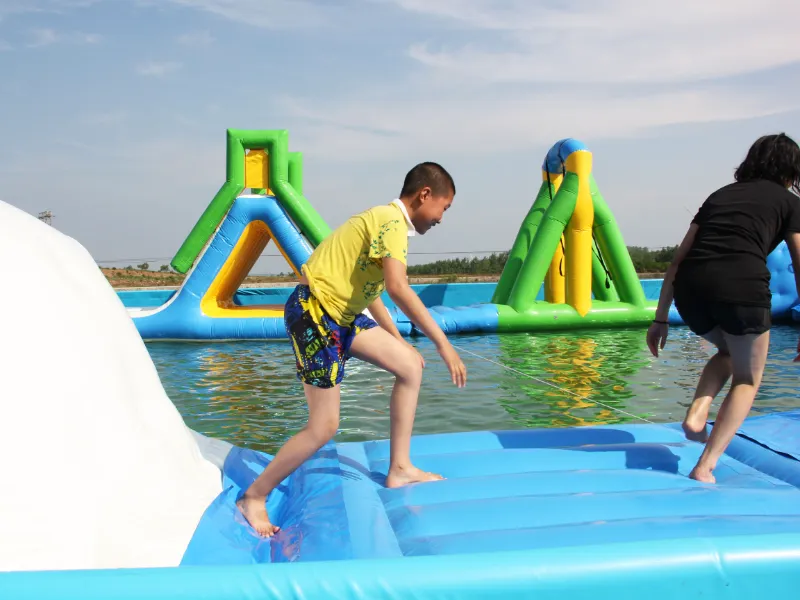
Custom Floating Inflatable Water Parks for Lakes, Resorts and Frame Pools
Custom floating inflatable water parks designed as modular obstacle course systems for commercial water areas. Suitable for lakes, artificial lakes, resort water zones and support-frame pool projects, with custom modules, anchoring layouts and one-stop project support available.
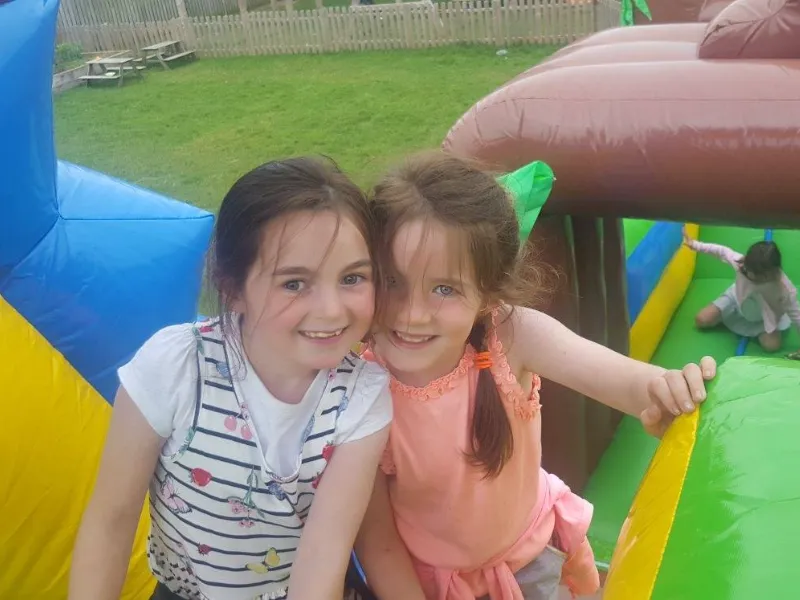
Custom Commercial Inflatable Bounce House Combos
Commercial inflatable bounce house combos with custom themes, slides, game zones and logo options. Designed for party rental businesses, distributors, indoor play centers and event operators that need durable, easy-to-deploy inflatable units for repeated commercial use.
Get a Quote for Custom Commercial Inflatable Obstacle Course
We typically reply within 12 hours with pricing and delivery options.