

Water Play Area Planning for Family Amusement Parks: Lessons from QIQU Amusement Park
Based on QIQU Amusement Park’s own water play area construction and operation, this article explains how family amusement parks should plan summer water attractions beyond simply buying equipment. It covers concrete swimming pools, water play fortresses, support frame pools, inflatable water obstacle courses, foam pools, filtration systems, safety staffing, water quality maintenance, changing facilities, and the hidden operational challenges buyers should consider before investing.
Emily
Founder of QIQU
Water Play Area Planning for Family Amusement Parks: Lessons from QIQU Amusement Park
Adding a water play area can completely change the summer traffic of a family amusement park.
At QIQU Amusement Park, our outdoor attractions were already designed for children and families. But once summer arrived, we quickly understood a simple truth: when the weather is hot, children and parents naturally move toward water.
A dry outdoor playground can become uncomfortable in high temperatures. Stainless steel slides, climbing structures, and open play areas may become too hot to use during peak summer hours. A water play area, on the other hand, gives families a reason to stay longer, take photos, join summer activities, and return again.
But building a water attraction taught us another lesson:
A water play area is not just a pool plus equipment. It is a complete operating system involving water quality, filtration, drainage, safety rules, lifeguards, changing rooms, anti-slip flooring, visitor behavior, and seasonal maintenance.
QIQU does not manufacture every type of water park equipment. For example, for the water play fortress, we selected a specialized supplier we had known for years through industry exhibitions. But we built and operated these projects ourselves, so we understand what buyers should consider before investing.
What We Built at QIQU Amusement Park
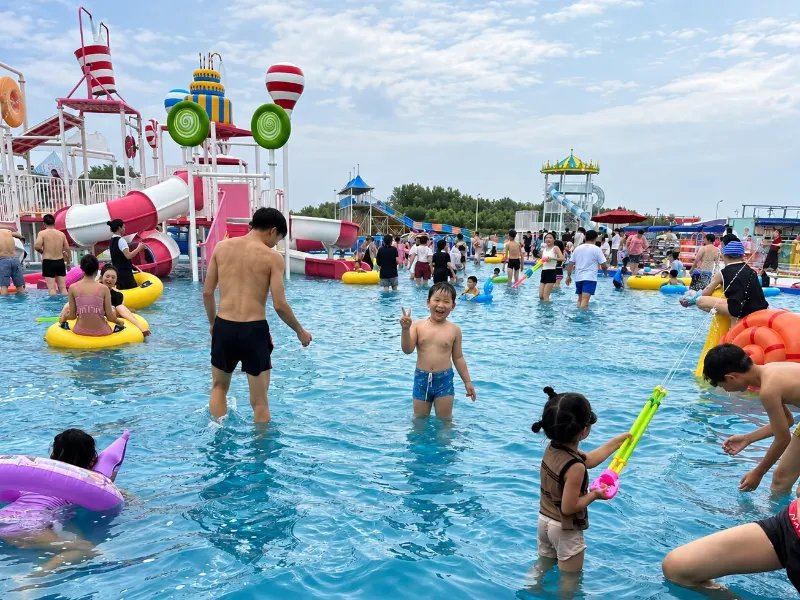
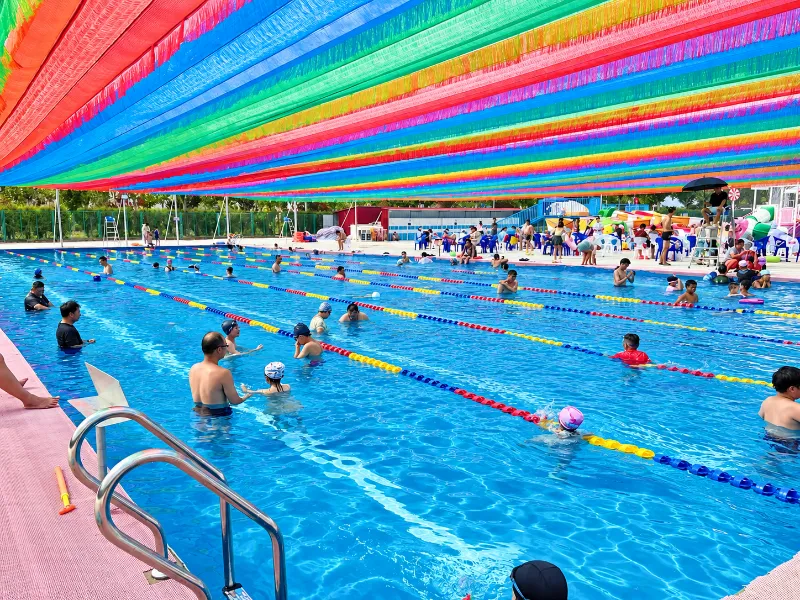
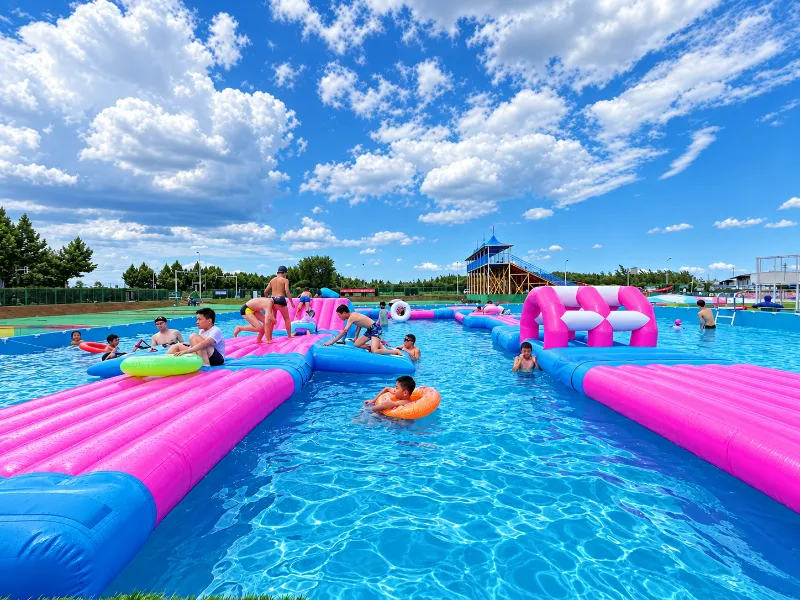
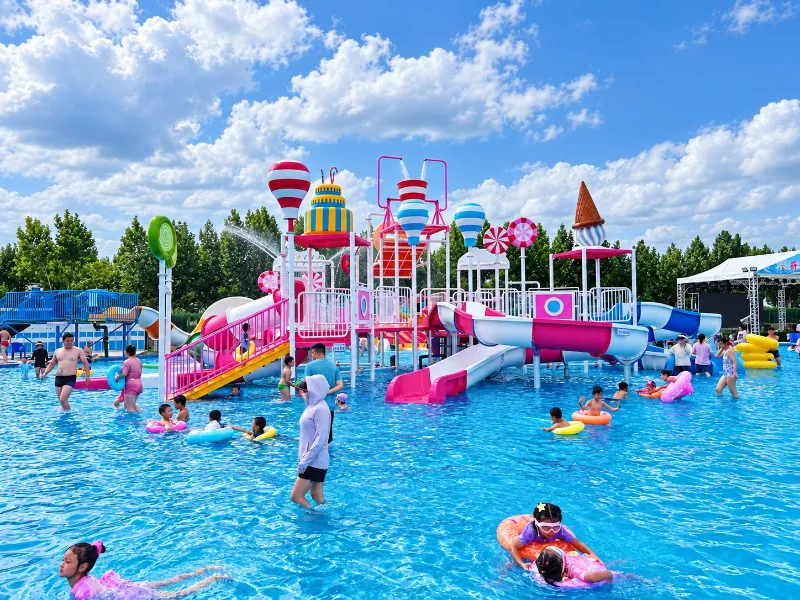
 The water play area at QIQU Amusement Park entered trial operation on July 9, 2024, and officially opened on July 31, 2024.
The project included several types of water attractions:
- A 20m × 40m outdoor concrete swimming pool
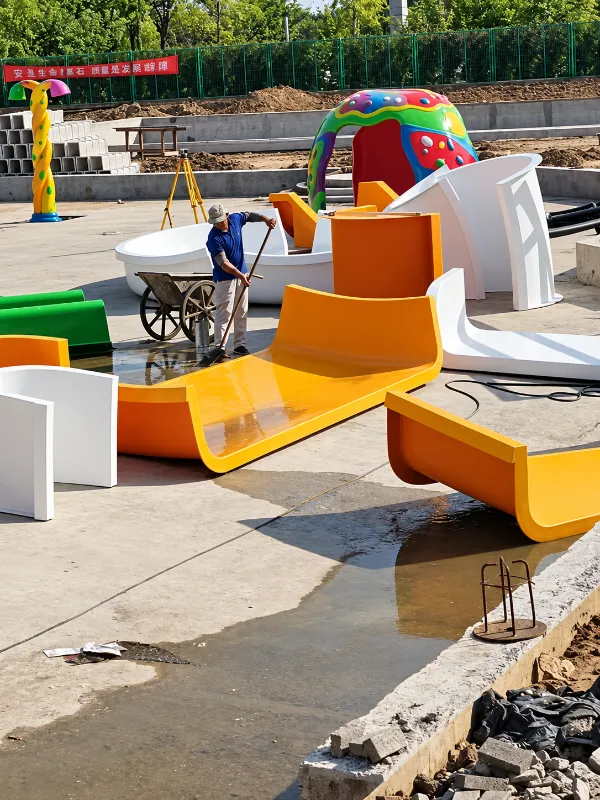
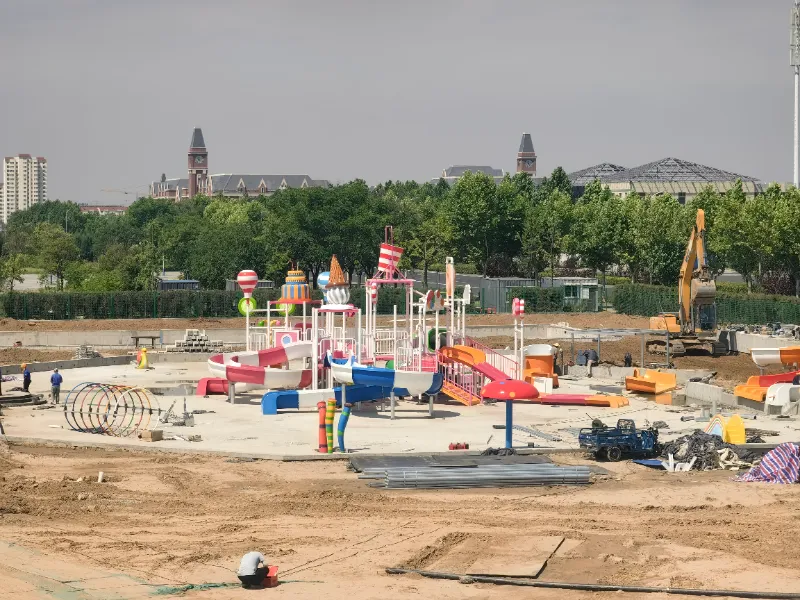
- A separate water play fortress pool
- Water slides
- A support frame pool with inflatable water obstacle courses
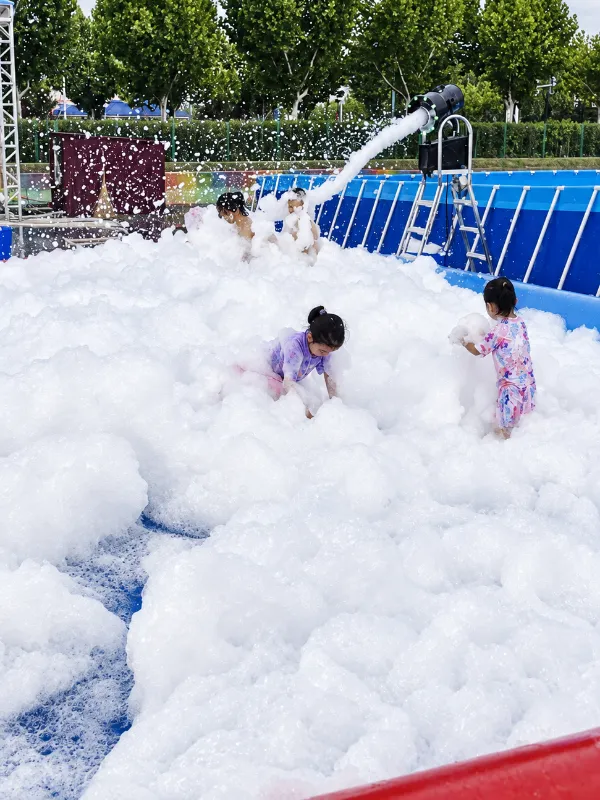
- A 10m × 20m inflatable pool for children’s foam play activities
- Changing rooms, showers, lockers, fans, and hot water systems
- Anti-slip mats around wet areas
- Lifeguards, safety staff, warning signs, and operating rules
- A filtration and water treatment equipment room
The swimming pool was designed with a sloped bottom. The shallowest area is about 1.1m, while the deepest area reaches about 1.7m. This layout allows different visitor groups to use the pool more comfortably.
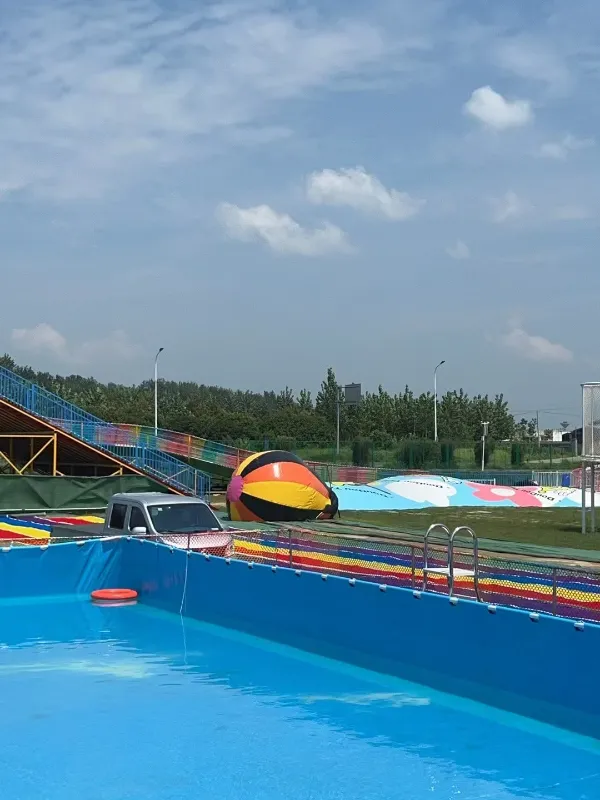
The support frame pool is about 20m wide, 40m long, and 1.5m high, with a water depth of around 1m. It was used for inflatable water obstacle courses that both children and adults could enjoy.
We also organized activity-style games, such as timed water obstacle challenges. To make the experience more fun and difficult, foam or soap water could be added to the inflatable course surface, making the challenge more slippery.
Why Water Attractions Matter in Summer
 For outdoor family amusement parks, water attractions are not just an optional decoration. They can become the main reason families visit during summer.
In our operation, many visitors came specifically for the water area during hot weather. Children enjoyed the water play fortress and inflatable obstacle courses, while teenagers and adults were more interested in the swimming pool.
The water area also created strong marketing value:
- Parents liked taking photos of children playing in the water.
- Summer activities became easier to organize.
- Swimming lessons could be offered with coaches.
- Families stayed longer in the park.
- The overall ticket value felt higher.
At QIQU Amusement Park, the water area was included in the general admission ticket. Only go-karts were charged separately. This made the water attractions part of the park’s overall value rather than a separate small project.
Choosing the Right Type of Water Attraction
Different water attractions serve different visitors and investment goals.
| Option | Best For | Main Advantage | Main Limitation |
|---|---|---|---|
| Concrete swimming pool | Long-term scenic areas, resorts, water parks, sports training venues | Strong operation capacity, better image, suitable for swimming lessons and long-term use | Higher investment, longer construction period, complex filtration and maintenance |
| Water play fortress | Children and family visitors | Strong visual appeal, slides and spray features attract young children | Requires pool planning, safety management, and reliable supplier selection |
| Support frame pool | Seasonal projects, family parks, temporary summer attractions | Faster installation, lower cost than concrete pools, removable or seasonal use | Lower visual grade than concrete pools, requires flat ground and proper drainage |
| Inflatable water obstacle course | Parent-child parks, camps, farms, summer events | Interactive, easy to create games and activities, strong traffic attraction | Requires supervision, anchoring, water depth planning, cleaning, and storage |
| Inflatable foam pool | Young children and event-style play | Good for summer activities and photo-friendly foam events | Requires foam equipment, cleaning, drainage, and staff control |
A buyer should not choose only by looking at product photos. The right solution depends on target visitors, operating season, budget, land condition, water source, drainage, and local safety rules.
Concrete Pool vs. Support Frame Pool
 A concrete swimming pool is suitable for long-term operation. It has a stronger visual effect, better capacity, and can support swimming lessons or more formal aquatic activities.
But it also requires a much larger commitment. Once the structure is built, changes are difficult. The filtration system, pool wall material, drainage, waterproofing, and safety layout must be considered early.
A support frame pool is more flexible. It is suitable for operators who want to launch a summer water attraction quickly, test the market, or run seasonal activities without building a permanent concrete pool.
The trade-off is clear: a support frame pool cannot match the long-term visual grade and structural capacity of a concrete pool, but the investment is lower, installation is faster, and the business can start sooner.
For many farms, camps, family parks, and seasonal attractions, a support frame pool with an inflatable water obstacle course can be a practical first step.
A Lesson We Learned from Pool Size
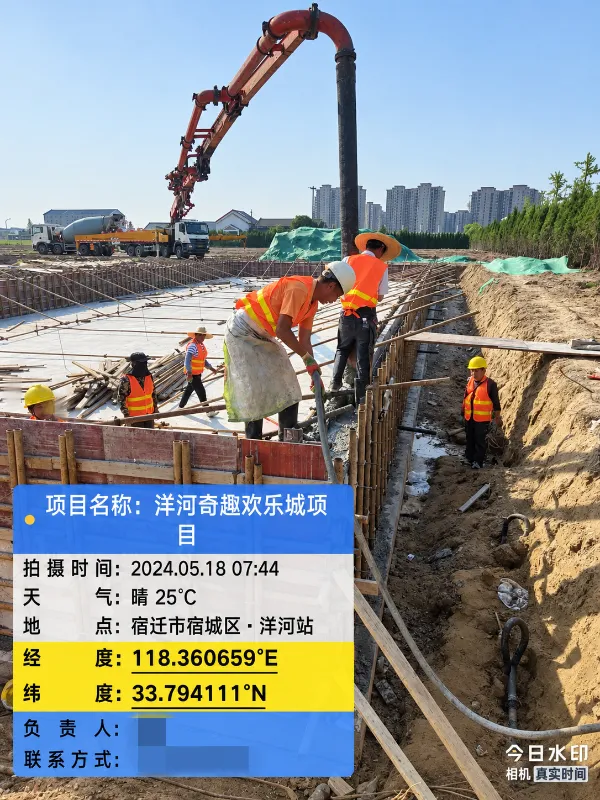 Our concrete swimming pool was built as a 20m × 40m pool.
If we could redesign it from the beginning, we would seriously consider 20m × 50m. Later, a swimming coach told us that according to local requirements, a pool of that scale could support more formal swimming activities and events. By the time we learned this, the project was already too far along to change.
This is an important lesson for buyers: pool size is not only about today’s budget. It may affect future programming, training classes, competitions, and revenue models.
Before building a permanent pool, ask what the pool may need to support in three to five years.
Water Quality Is Harder Than Most Buyers Expect
The most tiring part of water area operation is often not the equipment. It is water quality management.
At QIQU Amusement Park, we had to manage water treatment carefully, especially during peak summer operation. A typical cleaning cycle included:
- After closing, adding sedimentation agent and chlorine tablets.
- Stopping sand filtration overnight.
- Letting dirt settle to the bottom of the pool.
- Starting cleaning early the next morning, often around 4-5 a.m.
- Using two staff members with manual vacuum equipment.
- Using an automatic pool vacuum robot.
- Adding clarifier after cleaning.
- Restarting the sand filtration system before opening.
The goal was to have clean water ready before visitors arrived.
This work is repetitive and physically demanding. Buyers should not underestimate the labor required for pool cleaning, water testing, filtration, and daily inspection.
Safety Rules May Create Visitor Complaints
Operating a public swimming area also means enforcing rules that visitors may not always like.
For example, swim caps may be required for safety and hygiene. Long hair can block vision, affect breathing, become tangled, or create risks near drains and filtration systems. Swim caps also help lifeguards see swimmers’ faces more clearly.
Ordinary inflatable swim rings can also create safety problems. They are toys, not life-saving devices. They may leak, flip, slip away, block the water surface from lifeguards’ view, or interfere with rescue routes.
Some visitors may complain about these restrictions. But for operators, safety rules are not optional. A professional water play area needs clear rules, visible warning signs, trained staff, and consistent enforcement.
Lifeguards, Safety Staff, and Public Swimming Requirements
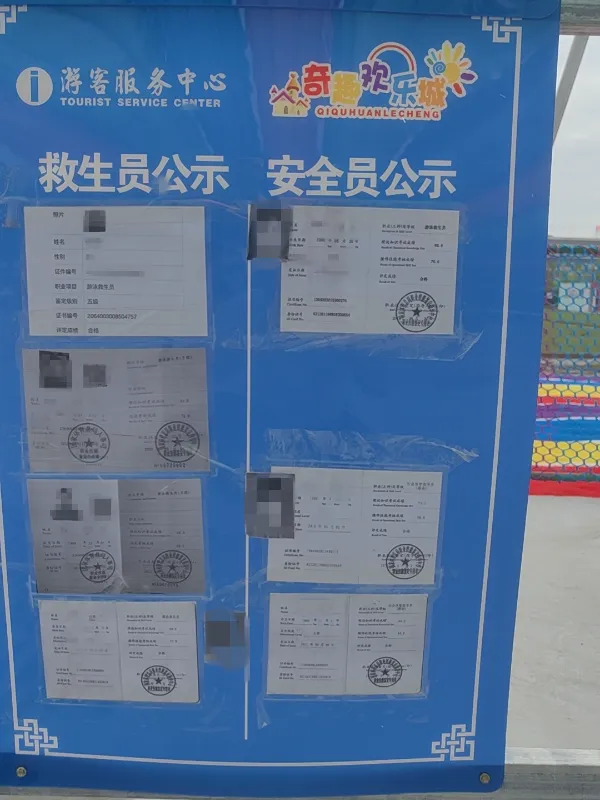 Our swimming area was inspected according to Chinese public swimming venue requirements, including GB 19079.1-2013.
The inspection covered items such as:
- Pool wall and pool bottom condition
- Visibility and blind spots
- Water depth markings and warning signs
- Pool ladders
- Anti-slip flooring
- Drainage protection covers
- Lighting
- Broadcasting equipment
- Lifeguard observation platforms
- Rescue equipment
- First-aid supplies
- Staff qualification display
- Safety warning signs
- Safety management systems
For our operation, we arranged 4 lifeguards and 2 safety staff. We also provided changing rooms, showers, lockers, fans, and an air-source hot water system in container-style facilities.
For overseas buyers, local regulations will be different. But the principle is the same: if people are swimming or playing in water, safety staffing and operating rules must be planned before opening.
Do Not Ignore the Equipment Room
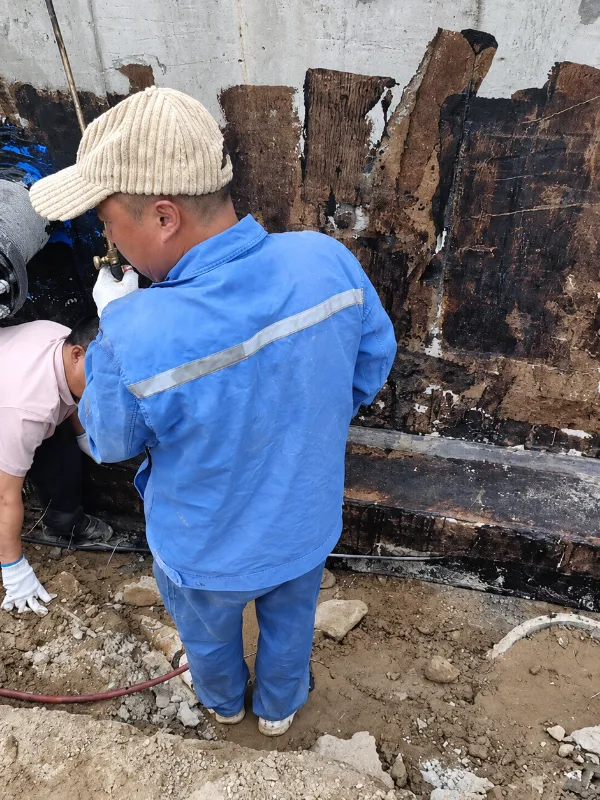
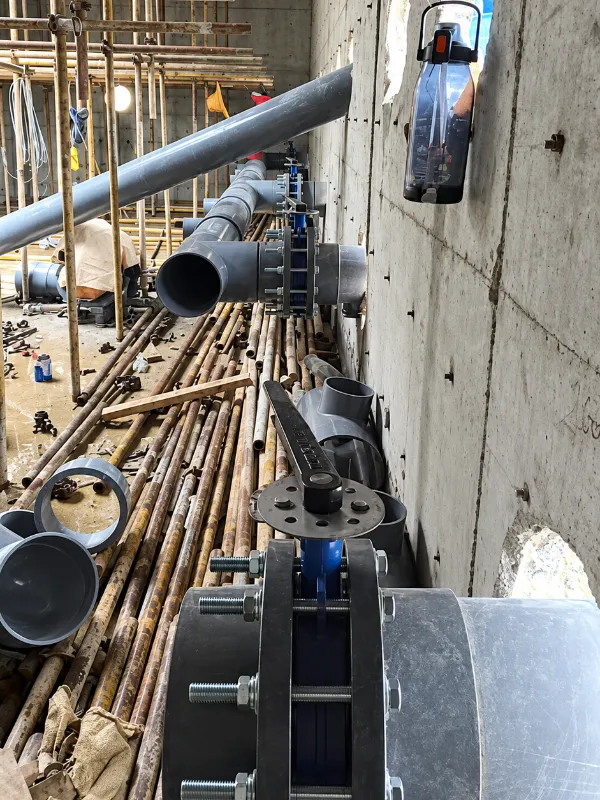 Many buyers focus on the pool and play equipment, but the filtration room is just as important.
Our filtration equipment room was partly underground. This created a waterproofing challenge. If water entered the equipment room, pumps, motors, and electrical systems could be damaged. More importantly, electrical equipment in a wet underground space can create safety risks.
During construction, waterproofing became one of the hardest parts of the project. The filtration equipment had already been installed, summer rain was coming, and the work had to be completed under very hot weather.
The lesson is simple: filtration rooms, pump rooms, underground structures, and waterproofing details should not be rushed. They should be designed and protected before equipment is installed whenever possible.
Outdoor Pool Finish: Paint or Tile?
Outdoor pool wall and floor finish is another decision buyers should think about early.
Tiles may look good at first, especially in indoor swimming pools. But for outdoor pools, long sun exposure and winter freeze-thaw cycles can cause tiles to loosen or fall off. Repairing tiles later can be difficult, especially if the original tile color or model is no longer available.
We chose professional swimming pool paint instead of tiles. The pool was painted in three coats. This made seasonal repair easier than tile replacement, but it still requires inspection and maintenance. After outdoor exposure, some areas may need to be scraped and repainted before the next season.
No finish is maintenance-free. Buyers should choose based on climate, repair convenience, visual expectations, and long-term operating cost.
Concrete Curing and Waterproofing Cannot Be Rushed
One of our construction lessons was concrete curing.
If concrete is not properly cured after pouring, later cracking or joint problems may appear. We learned this the hard way and later had to spend additional money on joint repair and sealing.
For buyers planning a concrete pool, do not compress the construction schedule too aggressively. Curing, waterproofing, testing, and equipment room protection all affect long-term operation.
A water attraction may look simple in photos, but the hidden engineering work decides whether it can operate smoothly.
What Buyers Should Confirm Before Buying Water Play Equipment
Before purchasing water play equipment, buyers should confirm:
- Is this a permanent or seasonal project?
- Who is the target visitor group: children, teenagers, adults, or families?
- Is there an existing water source?
- Where will water be drained?
- Is filtration required?
- Will the pool need lifeguards?
- Are changing rooms and showers required?
- Is the ground flat enough for a support frame pool?
- Is anti-slip flooring needed?
- How will equipment be cleaned and stored after the season?
- What local safety rules apply to public swimming or water play?
- Will the project be ticketed separately or included in general admission?
Do not buy water play equipment before planning filtration, drainage, lifeguards, changing rooms, anti-slip flooring, and visitor safety rules.
Planning a summer water attraction for a family amusement park, resort, camp, farm park, or scenic area?
Send us your site size, operating season, target age group, water source, drainage condition, and budget. QIQU can help you decide whether a support frame pool, inflatable obstacle course, inflatable pool, water play fortress, or concrete pool is more suitable for your project.
We can also help you think through the details many buyers overlook: filtration, safety staffing, anti-slip flooring, changing rooms, visitor rules, cleaning workload, and seasonal maintenance.
Frequently Asked Questions
Everything you need to know about this product. Can’t find what you’re looking for? Contact our team.
- There is no single best option. A children-focused park may benefit from a water play fortress or inflatable obstacle course. A long-term resort or scenic area may need a concrete swimming pool. A seasonal park may start with a support frame pool and inflatable water obstacle course.
- Yes, if the ground is flat, drainage is planned, and the pool is operated with proper safety control. A support frame pool is suitable for seasonal water play projects, temporary summer attractions, camps, farms, and family entertainment parks.
- An inflatable water obstacle course is a floating or pool-based inflatable structure with climbing, balancing, sliding, and crossing elements. It can be used for games, races, and summer activities.
- A swimming pool can attract teenagers, adults, and swimming training customers. But it also requires stricter safety management, water quality control, lifeguards, filtration, and local approvals. It is suitable for long-term operation rather than casual installation.
- The biggest challenge is usually not buying equipment. It is managing water quality, safety rules, lifeguards, cleaning, drainage, visitor behavior, and seasonal maintenance.
- No. QIQU manufactures support frame pools, inflatable pools, and inflatable water obstacle courses. For water play fortress equipment, we work with specialized partners. Our advantage is that we have built and operated these projects in our own amusement park, so we understand how different systems work together.
Ready to Apply These Strategies?
Get a custom ROI projection and layout plan for your specific project.
Request a Free ConsultationRelated Articles
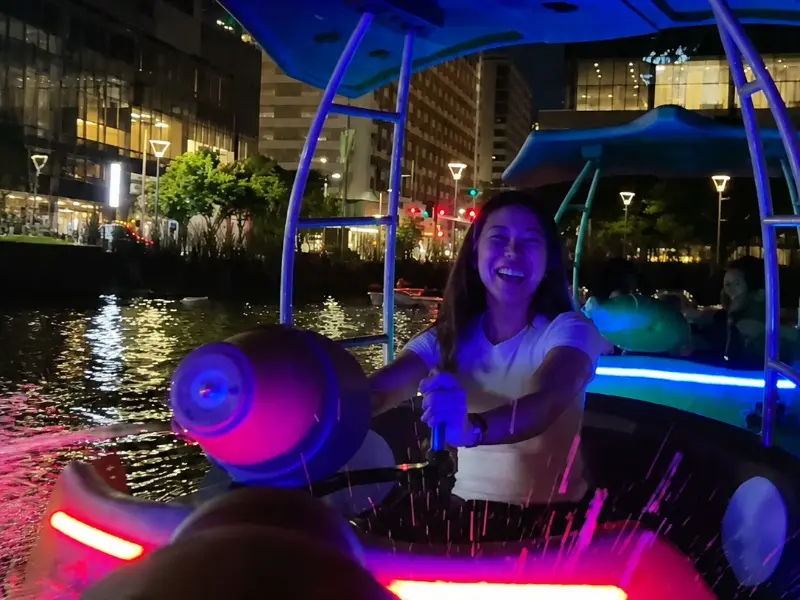
Houston Commercial Bumper Boat Case Study: How QIQU Turned a City Lake into a Viral Water Attraction
A deep commercial bumper boat case study from Houston, Texas. See how QIQU self-developed bumper boats became a viral urban water attraction at Discovery Green, gained coverage from local TV, newspaper, city guides, travel platforms and hotel event pages, generated 10M+ combined social media engagements, and proved real visitor demand in a U.S. park operation.
Read more
About QIQU: The Engineering Truth Behind How We Build Amusement Parks
QIQU is an amusement engineering company evolving from commercial inflatable systems to PE rotomolded park infrastructure. Built from real factory and park operations since 2012, we design amusement equipment based on real-world operational experience, not theory.
Read more