

How a Spanish Inflatable Rental Company Evaluated QIQU During a Custom Inflatable Equipment Project
After months of discussions about products, custom designs, and pricing, a Spanish inflatable rental company visited QIQU's factory to inspect materials, stitching, and manufacturing quality firsthand. The project covered a range of custom inflatable attractions, with 26 units in the original order and 27 delivered in total. Discover how factory evaluation, design collaboration, and individual product testing supported a real rental equipment project now operating in Spain.
Emily
Founder of QIQU
From First Contact to Factory Visit: Building Trust in a Custom Inflatable Manufacturer
A factory visit doesn't always come before a purchase decision.
For one inflatable rental company in Marbella, Málaga, Spain, the decision to work with QIQU developed through conversations, product discussions, and custom design planning over time. By the time the customer arrived at our factory in December 2025, he had already paid an initial deposit.
The visit was an opportunity to confirm something that product photos and quotations alone could not fully demonstrate: how the inflatables were actually made.
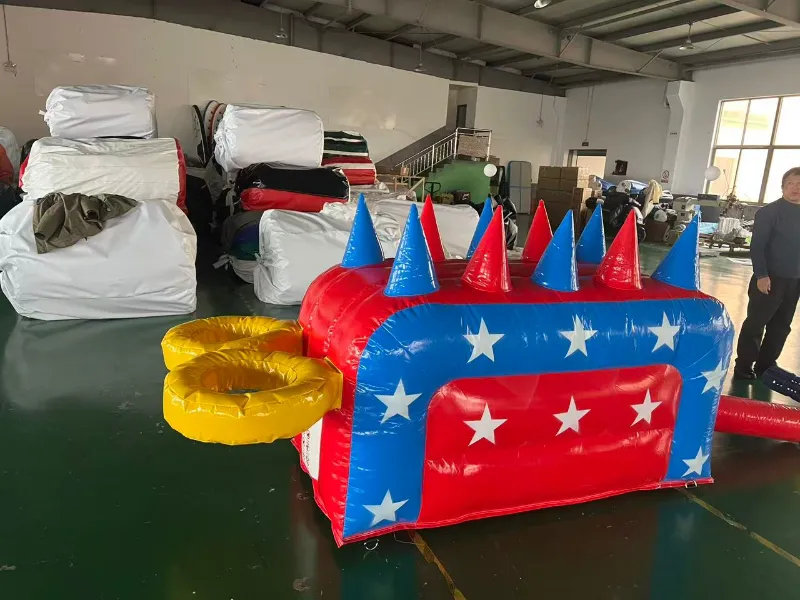
The project involved a variety of commercial inflatable attractions for the customer's rental business, including inflatable castles, obstacle courses, a water slide, and water walking balls.
What began as a WhatsApp inquiry in March 2024 eventually became a 26-unit order, followed by an additional in-stock purchase. In total, 27 inflatable products were delivered to Spain.
This is how the project developed, what the customer examined during his factory visit, and how QIQU managed the customization, production, and pre-shipment checks.
From Social Media Videos to a Conversation With QIQU
The first contact came in March 2024.
The customer had seen videos of QIQU's products and manufacturing activities on social media. He contacted us through WhatsApp, asking where our factory was located and what types of inflatable equipment we could supply.
At that stage, there was no confirmed order.
Over the following months, we stayed in contact intermittently. We shared product photos and catalog options, discussed possible customizations, and updated quotations as the customer's equipment requirements became clearer.
The customer operated an established inflatable rental business in southern Spain. His equipment was intended for commercial use at events such as local festivals, community celebrations, shopping mall promotions, and corporate activities.
That made product variety important.
A rental company serving different venues and event organizers cannot always rely on a single size or style of inflatable. The equipment needs to fit different spaces, appeal to different audiences, and offer suitable activities for the events being served.
Rather than selecting one standard model, the customer gradually developed a mixed equipment order.
By November 2025, after discussions about product choices, customization, and pricing, he was ready to move forward.
On November 28, 2025, he paid an initial deposit.
Six days later, he visited QIQU's factory in person.
A Mixed Inflatable Equipment Order for a Rental Business
The project covered several types of inflatable attractions.
Inflatable castles formed a substantial part of the order, alongside inflatable obstacle courses, a water slide, and water walking balls.
These were not all identical products with different colors.
The customer selected equipment with different dimensions, themes, and activity features. Some were intended to provide a combination of jumping, climbing, obstacles, and sliding within a single inflatable structure.
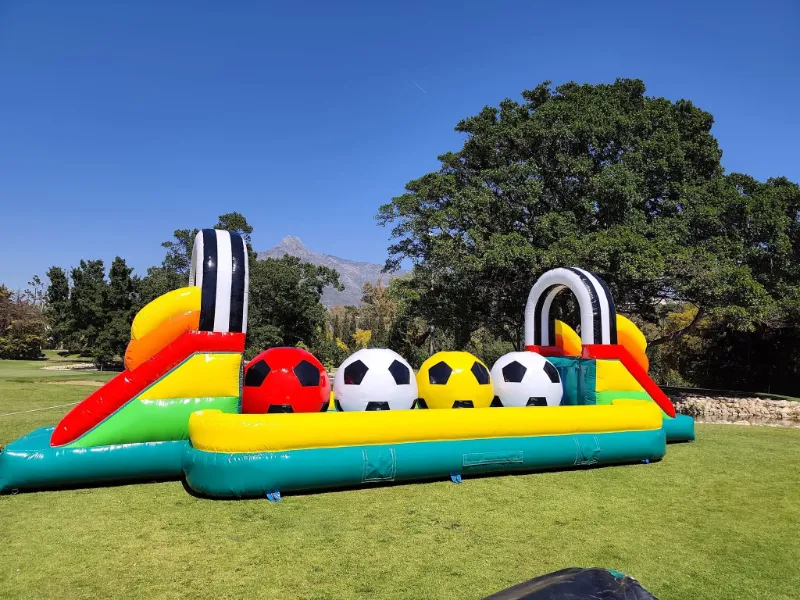
For example, three customized inflatable bounce house combos were designed at approximately 5 × 4 meters each.
Although similar in overall size, the three designs used different visual themes and activity layouts. The customer reviewed several design options before choosing the versions he wanted for his rental fleet.
This kind of project requires more than reproducing a photograph from a product catalog.
The important details need to be agreed upon before manufacturing begins: dimensions, appearance, layout, and the arrangement of individual play features.
For a rental operator, these decisions also affect how each inflatable can be used at different events.
Turning Product Ideas Into Approved 3D Designs
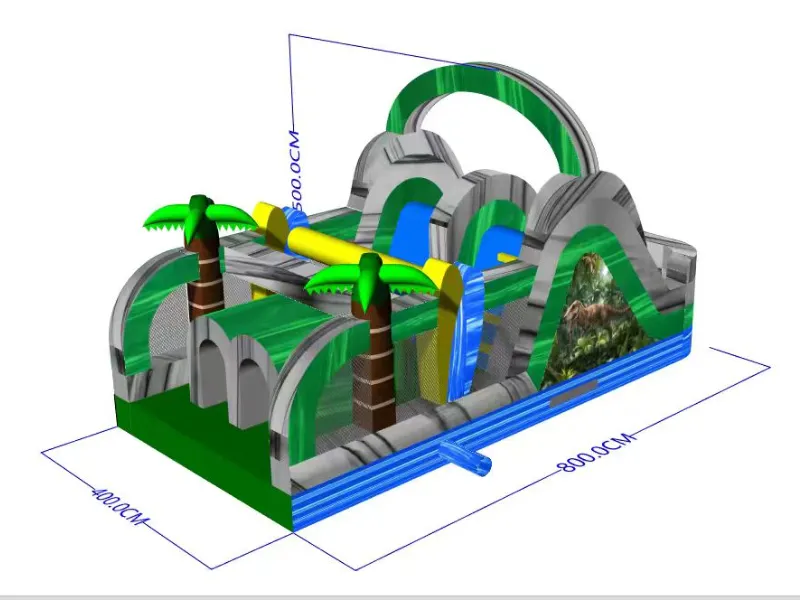 Once the main product choices were established, QIQU prepared 3D design drawings for the customized equipment.
The customer reviewed the designs and requested changes.
Some adjustments concerned colors and combinations of colors. Others involved decorative themes, exterior shapes, dimensions, overall structures, or the placement of internal activities.
For the multifunction inflatable castles, the discussions included how jumping areas, slides, and obstacle features would work together within the available space.
The designs were not approved in a single round.
QIQU revised the drawings in response to the customer's feedback and presented updated versions for review. This continued until the customer was satisfied with the final designs.
We retained the design records, including initial drawings, revised versions, and the final approved designs.
Those records provide a clear way to compare what was originally proposed with what the customer eventually approved.
The final 3D designs were confirmed in early December 2025, before the corresponding production work began.
Later, the completed inflatables could be compared directly with those approved drawings.
For buyers purchasing custom commercial inflatables, this design confirmation stage is important. It gives both the manufacturer and the customer a specific reference for the dimensions, appearance, and functional layout expected from the finished product.
Why the Customer Visited QIQU's Factory
On December 4, 2025, the customer arrived at QIQU's factory.
He was not visiting an unfamiliar supplier for the first time. We had already spent considerable time discussing the equipment, and he had made an initial payment.
But there is a difference between discussing manufacturing quality and seeing the work for yourself.
During the visit, the customer examined the production environment and looked closely at the inflatable equipment being made.
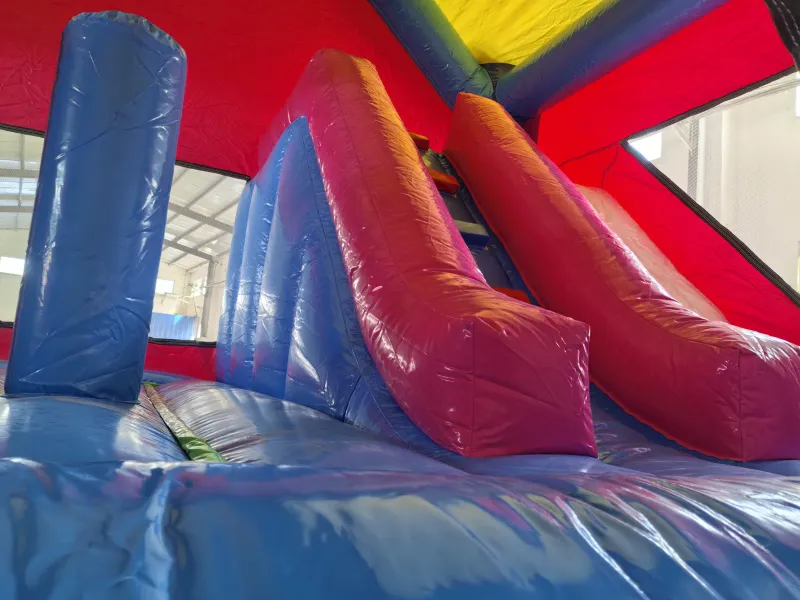
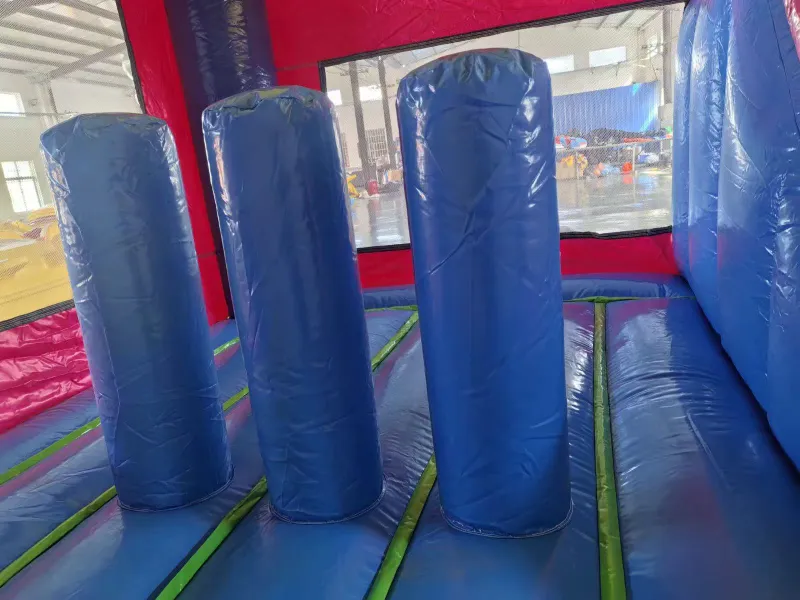
His attention included the PVC materials, stitching, seams, and reinforced areas.
For relevant products, he was able to examine the 0.55 mm PVC material used in their construction. He also looked at how different sections were joined and reinforced.
These are details that are difficult to judge from a finished product photograph.
An attractive design may tell a buyer what an inflatable looks like, but it does not show how its seams are sewn, how stressed areas are reinforced, or how the factory handles the manufacturing process.
The customer was able to observe those details directly.
The visit also gave him an opportunity to inspect physical product samples, including water walking balls available at the factory.
Those samples became part of the final product discussions.
This was a customer's own factory visit and product inspection, not a formal third-party supplier audit. Its value came from the opportunity to see the manufacturing environment and examine actual products before completing the purchase.
A Conversation I Remember From the Visit
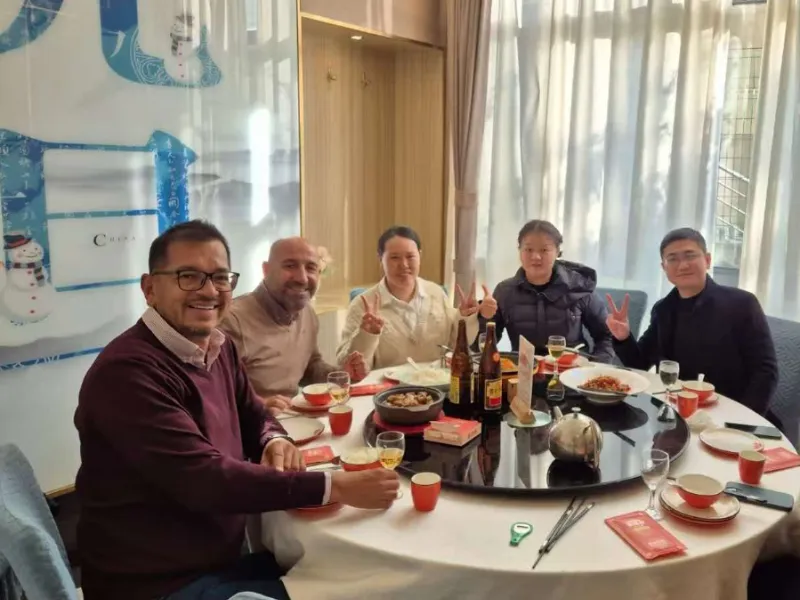 Photo shared with our client's permission.
I accompanied the customer during his visit.
Later, while we were having a meal together, he spoke positively about the products we made. He also suggested that QIQU consider attending the following year's IAAPA event in London, noting the interest in inflatable attractions in the European market.
I explained that QIQU regularly attends IAAPA's trade show in Orlando.
It was a straightforward conversation between a manufacturer and someone who had experience operating inflatable equipment.
What mattered was that he had now seen our factory and our work in person, rather than relying entirely on the photos, videos, and quotations we had shared previously.
Following the factory visit and confirmation of the remaining order details, the customer completed payment of the outstanding balance that same day.
The visit did not create the purchasing decision from nothing. It helped the customer verify the manufacturer he had already been considering and move the project forward.
From Final Design Approval to Production
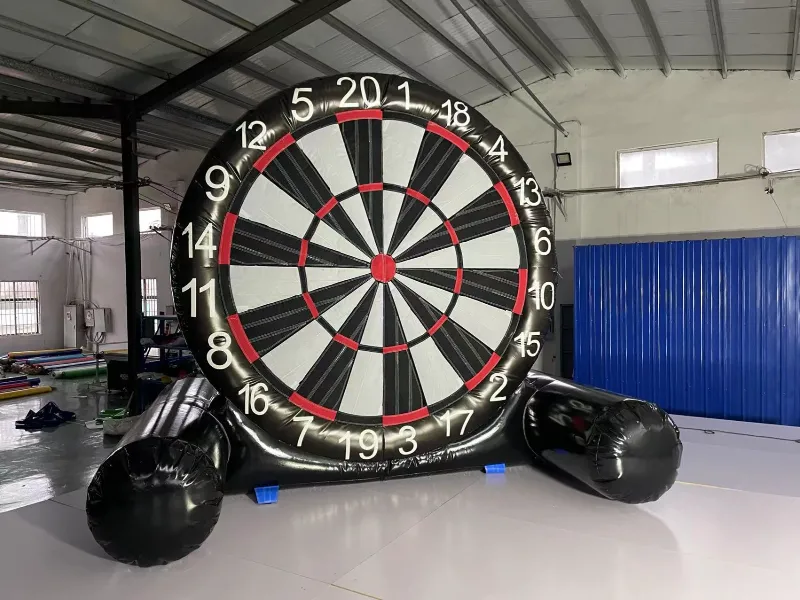 With the product details and final designs confirmed in early December 2025, QIQU proceeded with the production arrangements.
The order involved several different types and sizes of commercial inflatable equipment, so production and inspection needed to be coordinated across the full batch.
The manufacturing work included preparing materials, cutting and sewing components, assembling inflatable structures, and checking the completed products against their approved designs.
Different inflatable products have different construction requirements.
A compact bounce house combo, a large obstacle course, and a water slide may all use commercial inflatable construction methods, but their shapes, functional areas, and manufacturing details are not identical.
For this project, QIQU followed the approved designs rather than treating every product as a standard model.
The customer was also kept informed as products were completed.
We shared finished-product photos and videos so he could review the actual equipment before shipment.
This provided an additional opportunity to check the products against the designs that had been agreed upon earlier.
Every Product Was Inflated and Checked Before Packing
A significant part of this project was the pre-shipment inspection.
The original order contained 26 inflatable products, and all 26 underwent individual inflation testing before packing.
This was not a test performed on just one representative product from the batch.
Each inflatable was set up and inflated so the team could examine the finished structure and check relevant details.
The checks included the overall shape and appearance, seams and stitching, structural details, inflation performance, and the relationship between the completed product and its approved design.
The team also checked the relevant accessories and prepared the products for packing.
The customer received finished-product photos and videos for review before dispatch.
There was also one additional water walking ball that the customer purchased separately from QIQU's available stock. Although it was not part of the original 26-unit order, it also underwent inspection and inflation testing before shipment.
On January 29, 2026, QIQU completed the original 26-unit production order.
That was two days ahead of the agreed production completion date.
The additional in-stock water walking ball was not part of that original manufacturing schedule.
Completing the order ahead of schedule was useful, but the more important point was that the products had been inspected and reviewed before being packed for export.
Packing and Delivering 27 Inflatable Products to Spain
The original contract covered 26 inflatable products.
After the additional purchase of one in-stock water walking ball, the final shipment contained 27 inflatable units in total.
The customer arranged the freight forwarding service, while QIQU handled the product packing, container loading, and coordination required for collection.
The equipment was prepared and loaded together for shipment to Spain.
The customer subsequently confirmed receipt of the full shipment.
No transport damage or product quality problems were reported to QIQU following delivery.
That does not mean a manufacturer can promise that inflatable equipment will never require maintenance. Commercial rental equipment needs appropriate handling, operation, storage, and ongoing care.
What this project does demonstrate is the complete process behind a real order: agreed product specifications, approved designs, manufacturing, individual inflation checks, customer review, packing, and delivery.
From Factory Production to Real Rental Operations in Spain
 The story did not end when the container left the factory.
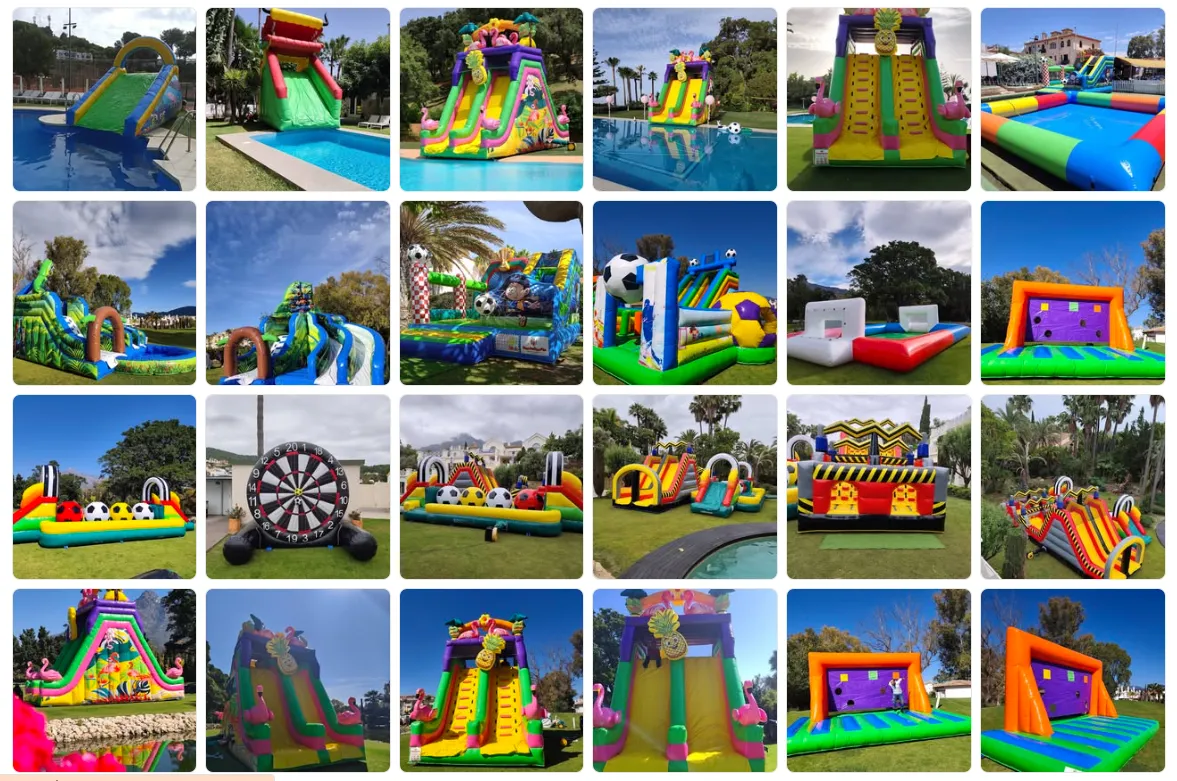
The customer later shared photos of the inflatable equipment being used in Spain.
These were not studio images or factory demonstrations.
They showed the products in actual outdoor event settings, where inflatable rental equipment is used by local customers.
For QIQU, these operating photos are particularly useful because they connect the custom design and manufacturing process with the equipment's intended commercial application.
A 3D rendering shows the planned product.
A factory photograph shows the finished product.
An operating photograph shows that same equipment in the environment for which it was purchased.
Together, these provide a more complete picture of the project than any single product image could offer.
The customer has continued to stay in contact with QIQU following the first order.
We value that ongoing communication, but the completed project stands on its own as a documented example of a professional rental company's factory visit, custom equipment procurement, and delivery.
What Inflatable Rental Companies Should Check Before Choosing a Manufacturer
 A factory visit can help buyers answer practical questions that may not be clear from a catalog.
Based on the areas examined during this project, rental companies evaluating a commercial inflatable equipment manufacturer may want to pay particular attention to the following:
-
Materials: Confirm which PVC materials are being used for the specific product and whether their specifications match the agreed requirements.
-
Stitching and seams: Examine how panels are joined, how seams are finished, and whether the workmanship is consistent across the product.
-
Reinforced areas: Look at parts of the inflatable that experience repeated movement or concentrated loads and ask how those areas are constructed.
-
Custom design confirmation: Review dimensions, colors, themes, and activity layouts using clear drawings before manufacturing starts.
-
Finished-product inspection: Ask how the factory checks the completed inflatables and whether individual products can be inflated and reviewed before packing.
-
Communication and documentation: Confirm how design changes, final approvals, production updates, and shipment preparations will be communicated.
Not every buyer can visit a factory in person.
Where a visit is not practical, detailed production photos, design records, video inspections, and finished-product testing records can help buyers review important parts of the process remotely.
However, the evidence should relate to the products actually being ordered, rather than only showing general factory promotional materials.
A Factory Visit Was One Part of a Longer Purchasing Decision
 This Spanish customer's project was not decided during a single meeting.
It began with social media videos and a WhatsApp inquiry in March 2024. Product discussions, custom designs, and quotations followed over time.
The customer made an initial payment in November 2025, then visited QIQU's factory in December to examine the manufacturing work firsthand.
After final design confirmation, the order moved through production, individual inflation testing, customer review, and shipment.
The result was a completed commercial inflatable equipment project involving 27 delivered products, with real operating photographs from Spain.
For rental companies choosing a manufacturing partner, the lesson is straightforward: evaluate not just the product images and quotations, but also how a supplier develops custom designs, responds to feedback, manufactures the equipment, and verifies the finished products.
Those are the details that turn a product proposal into a completed order.
Frequently Asked Questions
Everything you need to know about this product. Can’t find what you’re looking for? Contact our team.
- The customer had already discussed product options, customization requirements, and pricing with QIQU and had paid an initial deposit. The factory visit on December 4, 2025, allowed the customer to inspect the manufacturing process and product quality firsthand before finalizing the remaining order details.
- The customer examined the PVC materials, stitching, seams, reinforcement details, and inflatable products at QIQU's factory. The visit also provided an opportunity to see the production environment and inspect available product samples. This was a firsthand customer visit, not a formal third-party factory audit.
- The order included inflatable castles, obstacle courses, a water slide, and water walking balls for the customer's rental business. The original contract covered 26 inflatable units. One additional water walking ball was purchased separately from available stock, bringing the total number of delivered units to 27.
- Yes. QIQU prepared 3D designs and revised elements such as colors, themes, dimensions, overall structures, and internal activity layouts based on the customer's feedback. The final designs were approved before production began.
- Yes. All 26 units in the original order underwent individual inflation testing before packing. The additional in-stock water walking ball was also inspected and inflation-tested before shipment. QIQU shared finished-product photos and videos with the customer for review before dispatch.
- QIQU completed production of the 26 contracted inflatable units on January 29, 2026, two days ahead of the agreed production completion date. The additional water walking ball was an in-stock item and was not part of the original manufacturing schedule.
- Yes. QIQU works with commercial buyers on customized inflatable equipment, including product dimensions, visual themes, colors, and activity layouts. Rental companies can contact QIQU to discuss their venue requirements, preferred equipment types, and customization needs before confirming a design for production.
Ready to Apply These Strategies?
Get a custom ROI projection and layout plan for your specific project.
Request a Free ConsultationRelated Articles
Houston Commercial Bumper Boat Case Study: How QIQU Turned a City Lake into a Viral Water Attraction
A deep commercial bumper boat case study from Houston, Texas. See how QIQU self-developed bumper boats became a viral urban water attraction at Discovery Green, gained coverage from local TV, newspaper, city guides, travel platforms and hotel event pages, generated 10M+ combined social media engagements, and proved real visitor demand in a U.S. park operation.
Read more
About QIQU: The Engineering Truth Behind How We Build Amusement Parks
QIQU is an amusement engineering company evolving from commercial inflatable systems to PE rotomolded park infrastructure. Built from real factory and park operations since 2012, we design amusement equipment based on real-world operational experience, not theory.
Read more