

How a South Korean Indoor Play Center Ordered 22 PE Bumper Cars from QIQU
A South Korean indoor play center purchased 22 battery-powered PE bumper cars from QIQU, including 11 custom pink units and 11 standard blue units. The project progressed from an initial 16-car inquiry to color customization, remote factory inspection, individual testing, and delivery to Hero Play Park in Gimhae. Discover how QIQU supported the customer's indoor attraction expansion, production requirements, and China-Korea FTA documentation.
Emily
Founder of QIQU
Why a Korean Indoor Play Center Added Battery-Powered Bumper Cars
In January 2024, QIQU received an inquiry from KIDSMONSTER, a South Korean indoor entertainment operator. The customer was expanding an existing children's play center in Gimhae and was considering adding bumper cars to its attractions.
The initial request was for 16 vehicles. Six months later, QIQU had completed a 22-car order, including 11 custom pink bumper cars and 11 standard blue models.
The project was not about creating a new bumper car design from scratch. It was about selecting an appropriate ride for an existing indoor venue, confirming the equipment and accessories, matching the customer's requested colors, and preparing a complete fleet for export.
The final destination was Hero Play Park in Gimhae, South Korea.
This case follows the actual purchasing process, from the customer's first questions on January 31, 2024, to the completed production, individual testing, shipping documents, and delivery in July.
An Indoor Attraction Without Overhead or Conductive Floor Power Systems
KIDSMONSTER already operated an indoor children's entertainment business. The customer wanted to introduce bumper cars as an additional attraction rather than replace an existing bumper car fleet.
During our discussions, the customer described bumper cars as a classic amusement attraction—something that continues to appeal to visitors because driving and interacting with other cars is enjoyable in itself.
But choosing the ride was also a practical decision.
Traditional bumper car installations can use overhead electrical grids or conductive floor systems to supply power. Adding that infrastructure inside an established entertainment venue can involve substantial electrical and construction work.
The customer wanted to avoid that complication.
QIQU's commercial battery-powered PE bumper cars use onboard rechargeable batteries instead of drawing power from an overhead grid or conductive floor.
The model features a rotomolded PE body, a steel chassis, an inflatable PVC bumper ring, and operating controls for managing ride sessions.
This made the product a suitable option for the customer's planned indoor attraction.
The venue already had a dedicated operating area with a physical enclosure. As a result, the customer did not need to order an additional inflatable safety barrier.
Avoiding overhead and conductive floor power systems does not mean that bumper cars can operate without proper site preparation. A suitable floor surface, appropriate boundaries, safe access, and staff supervision are still necessary.
For this project, the main advantage was that the customer could add battery-powered bumper cars without constructing the power infrastructure required by certain traditional designs.
From a 16-Car Inquiry to a 22-Car Purchase
The first inquiry arrived through 1688, a Chinese B2B sourcing platform, on January 31, 2024.
KIDSMONSTER's questions were specific.
The customer asked about the price, materials, dimensions, and operating speed of the bumper cars. They also wanted to confirm whether the quoted price included the inflatable bumper rings, batteries, and chargers.
We confirmed the equipment package and shared additional photographs and product information.
On February 6, QIQU issued a quotation for the original requirement of 16 bumper cars.
The customer did not place the order immediately. The indoor venue was still being prepared, so they needed more time before committing to the equipment purchase.
We stayed in contact.
On May 17, the customer returned with a new request: they wanted a customized pink color for part of the fleet.
The requested quantity subsequently increased from 16 to 22 vehicles.
The customer did not give us a specific explanation for the increase, so it would be inaccurate to attribute it to a particular floor-area calculation or attendance forecast.
By June 24, the product configuration and purchase quantity had been agreed upon, and KIDSMONSTER paid the deposit.
The final order consisted of 22 bumper cars of the same model and technical configuration, divided into two color groups.
Eleven Custom Pink Cars and Eleven Standard Blue Cars
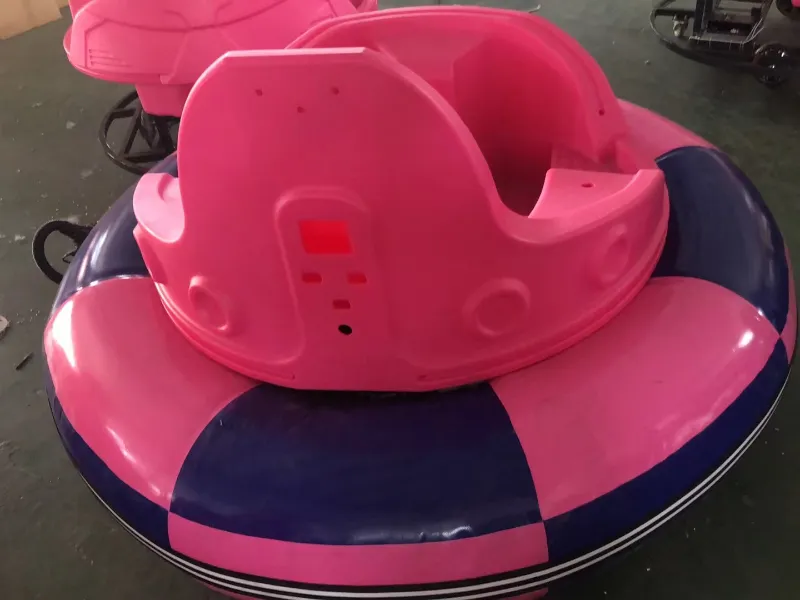
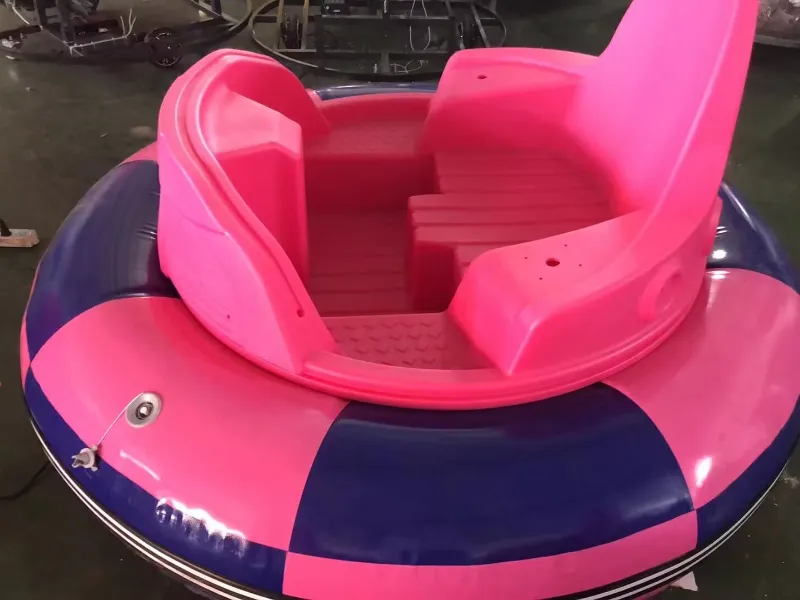
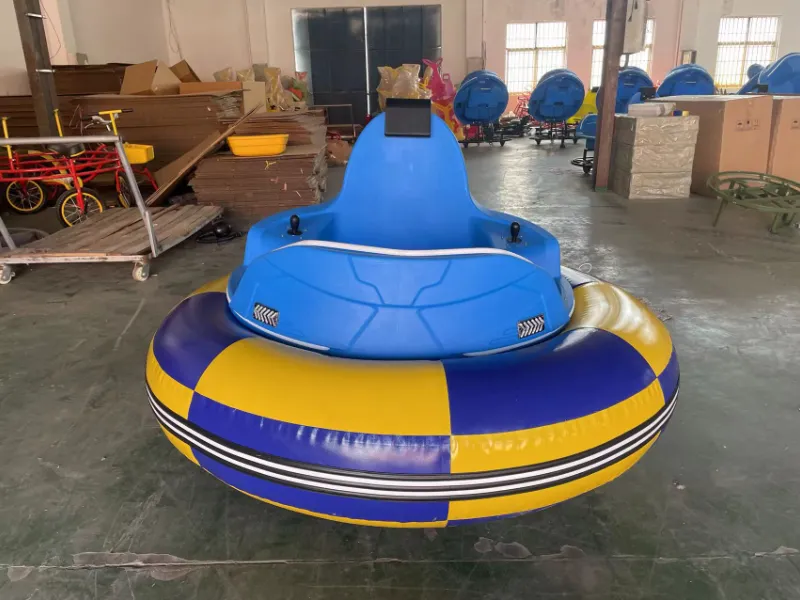 The most visible customization in this project was the color arrangement.
KIDSMONSTER ordered two versions of the same PE bumper car:
-
11 custom-color units: Pink PE bodies with pink-and-blue inflatable bumper rings.
-
11 standard-color units: Blue PE bodies with blue-and-yellow inflatable bumper rings.
The customer supplied a specific color reference for the pink body.
Rather than interpreting that request as a general preference for any shade of pink, we used the reference supplied by the customer and showed the resulting appearance for confirmation before continuing with the batch.
The finished pink cars were photographed at the factory, along with the standard blue models.
This was a visual customization project. Both groups retained the same underlying bumper car model, dimensions, and operating configuration.
For buyers ordering multiple vehicles, that distinction matters. Changing a color scheme is different from redesigning the vehicle structure or modifying its electrical system.
In the Korean order, QIQU could provide two distinct appearances while keeping the core model consistent across all 22 cars.
The project also illustrates why buyers should confirm color details before production, particularly when they want a specific corporate or venue color rather than a manufacturer's standard option.
Reviewing the Factory and Equipment Through a Live Video Call
KIDSMONSTER did not visit QIQU's factory in person.
Instead, we conducted a live video inspection through WeChat.
During the call, the customer reviewed the production environment and several important aspects of the bumper cars, including the PE body, chassis, motors, batteries, inflatable bumper rings, and product operation.
This gave the customer an opportunity to see the actual equipment and ask questions without traveling to China.
The inspection was a live customer review, not a formal third-party factory audit.
It also provided more direct information than a product catalog alone.
Photographs can show the shape, color, and general appearance of a ride. A live inspection gives a buyer the opportunity to ask about the components behind that appearance and see how the product operates.
For KIDSMONSTER, this was part of confirming the equipment before completing the purchase.
Every Bumper Car Was Tested Before Packing
QIQU completed production of the full 22-car order on July 15, 2024.
Before the vehicles were packed, each bumper car underwent individual inspection and functional testing.
The checks covered the PE body, chassis, motor operation, battery charging, remote-control functions, forward and reverse movement, 360-degree rotation, lighting, music, and the condition of the inflatable bumper ring.
These were not tests conducted on only one or two representative cars.
All 22 vehicles were checked individually.
The factory retained production photographs and running-test footage from the batch. The completed cars were also checked against the two approved color arrangements.
For a commercial operator importing equipment from overseas, pre-shipment testing is especially relevant.
If an operating or control issue is identified while the equipment is still at the factory, the manufacturer has the opportunity to examine it before international transport.
That is different from discovering the same problem after the vehicles have reached an operating venue in another country.
Individual testing cannot eliminate every future maintenance requirement. Battery-powered amusement rides still require charging, regular inspection, and appropriate day-to-day operation.
But it provides a documented quality-control step before the customer takes delivery.
Packing 22 Cars Into Eleven Shipping Units
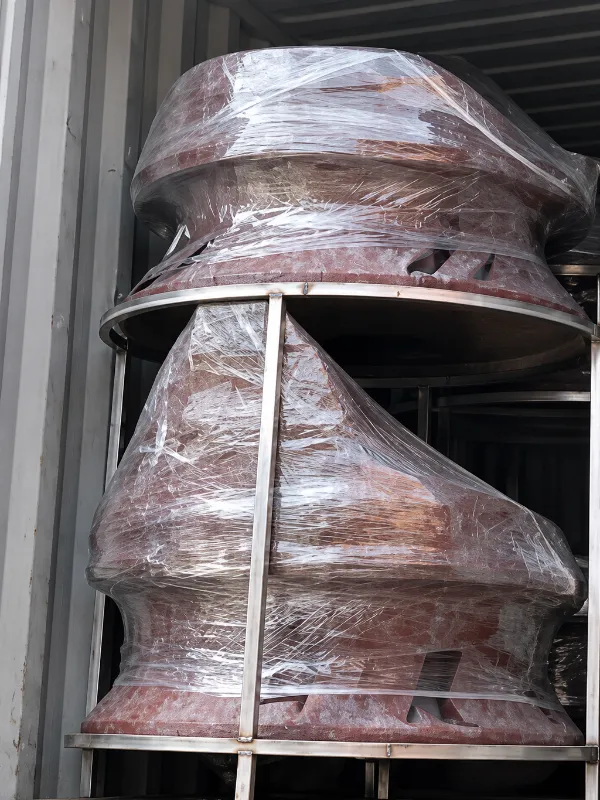
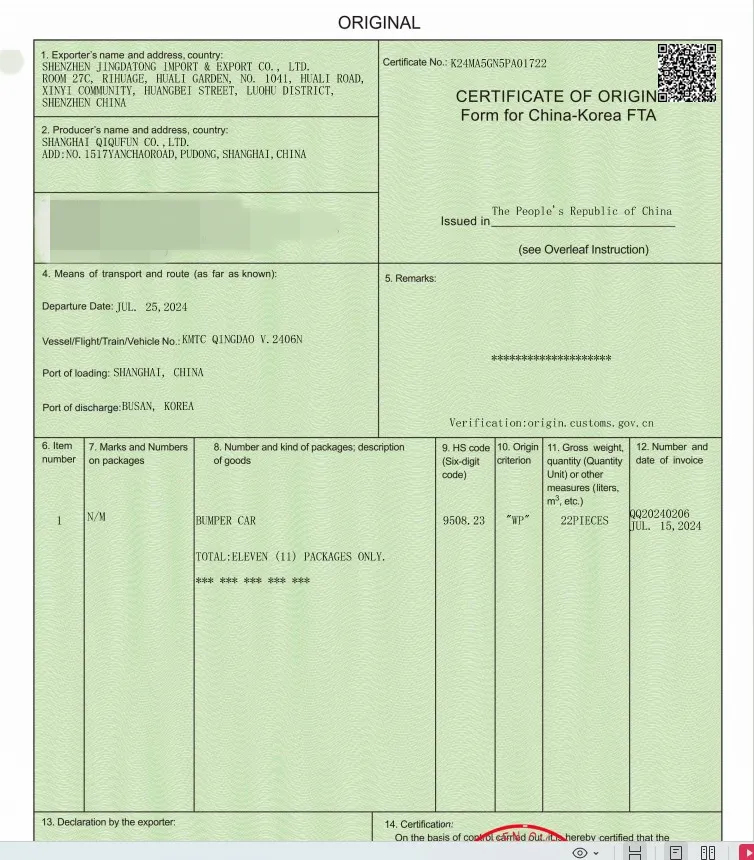 The bumper cars were packed in pairs.
QIQU secured two vehicles inside each iron shipping frame and used protective carpet wrapping around the equipment.
This resulted in eleven packing units for the 22 bumper cars.
The packaging quantity can also be checked against the China-Korea FTA certificate of origin prepared for the shipment, which records 22 pieces and 11 packages.
The customer arranged the freight forwarder, while QIQU handled the factory-side packing and coordination for dispatch.
The production and shipping timeline was as follows:
| Date | Project milestone |
|---|---|
| January 31, 2024 | First inquiry through 1688 |
| February 6, 2024 | Initial quotation for 16 bumper cars |
| May 17, 2024 | Customer requested the custom pink color |
| June 24, 2024 | Deposit paid for the confirmed order |
| July 15, 2024 | Production of 22 cars completed |
| July 22, 2024 | Final balance paid |
| July 25, 2024 | Shipment arranged from Shanghai to Busan |
| July 31, 2024 | Customer confirmed delivery to the venue |
The export documents identify Shanghai, China, as the port of loading and Busan, South Korea, as the destination port.
The customer subsequently confirmed receiving all 22 vehicles.
Supporting the Customer's China-Korea FTA Documentation
One detail made this project different from an ordinary domestic equipment order: KIDSMONSTER paid close attention to the paperwork required for importing bumper cars into South Korea.
During the purchasing process, the customer asked about the product's customs classification and the certificate of origin.
In particular, the customer wanted documentation relevant to preferential tariff treatment under the China-Korea Free Trade Agreement.
QIQU coordinated the origin documentation for the shipment, including the China-Korea FTA certificate of origin.
The customer was also provided with the existing CE documentation for the bumper car model, as requested.
The customer later told us that this shipment had received zero import duty treatment.
This was the customer's reported result for this specific transaction. It does not mean that all bumper cars imported into South Korea automatically qualify for a zero tariff.
Preferential tariff treatment depends on the applicable rules of origin, customs classification, valid documentation, and the importing country's requirements.
For international amusement equipment buyers, this is an important part of procurement planning.
A supplier's quotation is only one part of the overall import process. Buyers also need to understand the shipment terms, documentation, local compliance requirements, and potential duties or taxes.
For this Korean order, QIQU's role extended beyond manufacturing and packing the vehicles to coordinating the supporting product and origin documents.
Delivery to Hero Play Park in Gimhae
The 22 bumper cars were delivered to the customer's indoor entertainment venue in Gimhae.
The customer confirmed their arrival and later contacted QIQU with a practical operating question: how to adjust the bumper cars' session timer.
We had supplied the operating manual, and the subsequent communication helped the customer with the timer settings.
The timing controls are particularly relevant to indoor commercial attractions, where operators need to manage ride sessions and prepare the vehicles for the next group of visitors.
The customer later placed an additional order for parts.
We have also confirmed that the bumper cars were put into operation at the venue.
However, we do not have a complete set of public operating photographs showing the 22 vehicles in use at Hero Play Park. For this reason, we are not presenting factory photographs as if they were taken at the Korean site.
We are also not making claims about the venue's ticket sales, visitor numbers, revenue, or return on investment.
The documented result is more specific: 22 bumper cars were manufactured, individually tested, shipped to South Korea, delivered to the venue, and supported through subsequent operating communication.
What Other Indoor Entertainment Operators Can Learn From This Project
KIDSMONSTER's purchase provides several practical points for businesses considering battery-powered bumper cars.
1. Check the electrical requirements before selecting a ride.
Battery-powered bumper cars can avoid the overhead power grids or conductive floors required by some traditional designs. However, the venue still needs a suitable operating surface, proper boundaries, charging arrangements, and staff supervision.
2. Confirm exactly what the quotation includes.
KIDSMONSTER asked about batteries, chargers, and inflatable bumper rings from the beginning. Buyers should confirm these items, together with operating controls and any optional accessories, before comparing quotations.
3. Separate visual customization from technical customization.
In this project, the customer customized the body and bumper-ring colors without changing the underlying vehicle model. Any change involving motors, batteries, control systems, or structure should be reviewed separately.
4. Request evidence of individual pre-shipment testing.
A photograph of one finished bumper car cannot demonstrate that an entire batch has been checked. For this order, all 22 cars underwent individual operating and component inspections before packing.
5. Discuss import documentation before shipment.
KIDSMONSTER raised customs and certificate-of-origin questions during the purchasing process. Buyers importing amusement equipment should clarify documentation and local requirements in advance rather than waiting until the equipment reaches the destination port.
The main lesson is not that every indoor entertainment center should order 22 bumper cars.
It is that the appropriate fleet size, configuration, customization, and preparation process should be determined by the actual project.
A Completed 22-Car Project, From Inquiry to Operation
The Korean order began with a straightforward inquiry for 16 bumper cars.
Over the following months, the customer confirmed the equipment package, requested a custom pink color, increased the quantity to 22, reviewed the factory and products through live video, and finalized the order.
QIQU completed production on July 15, 2024, individually tested every vehicle, prepared eleven protected shipping units, and coordinated the export documentation.
By July 31, the customer had confirmed delivery to the venue in Gimhae.
The project continued into operating support through questions about timer settings and later parts purchases.
For QIQU, this case represents a practical example of how a battery-powered amusement ride can be supplied for an existing indoor entertainment center: clear equipment selection, specific customization, factory verification, full-batch testing, and documented international delivery.
Frequently Asked Questions
Everything you need to know about this product. Can’t find what you’re looking for? Contact our team.
- The customer was expanding an existing indoor children's entertainment center and wanted to introduce bumper cars without installing the overhead power grids or conductive floor systems required by some traditional bumper car designs. QIQU's battery-powered PE bumper cars offered a suitable option for the planned attraction.
- The customer initially requested a quotation for 16 bumper cars in February 2024. After further discussions and continued development of the indoor venue, the final order increased to 22 units. The customer did not specify the exact reason for the quantity increase.
- The order included 11 bumper cars with custom pink PE bodies and pink-and-blue inflatable bumper rings, alongside 11 standard blue cars with blue-and-yellow bumper rings. The customer supplied a specific pink color reference, and QIQU produced a sample appearance for approval before proceeding with production.
- The customer did not travel to the factory in person. Instead, QIQU conducted a live factory inspection through WeChat video, allowing the customer to review the production environment, PE bodies, chassis, motors, batteries, inflatable bumper rings, and product operation remotely.
- Yes. Every bumper car underwent individual pre-shipment testing. The checks included body and chassis inspection, motor operation, battery charging, remote control functions, forward and reverse movement, 360-degree rotation, lighting, music, and the inflatable bumper rings.
- QIQU completed production on July 15, 2024. The customer paid the remaining balance on July 22, and the shipment was arranged for departure from Shanghai on July 25, bound for Busan, South Korea. The customer confirmed delivery to the venue on July 31, 2024.
- Yes. QIQU supplied the customer with relevant product documentation and certificates of origin, including a China-Korea FTA certificate of origin. The customer subsequently confirmed receiving zero import duty treatment for this shipment. Preferential tariff eligibility depends on the applicable rules of origin, product classification, and import procedures and should be verified for each shipment.
- Yes. QIQU supports bulk orders of commercial PE bumper cars, including custom body colors and inflatable bumper ring combinations. Buyers can discuss their venue requirements, preferred quantities, operating configurations, and color specifications with QIQU before confirming an order.
Ready to Apply These Strategies?
Get a custom ROI projection and layout plan for your specific project.
Request a Free ConsultationRelated Articles
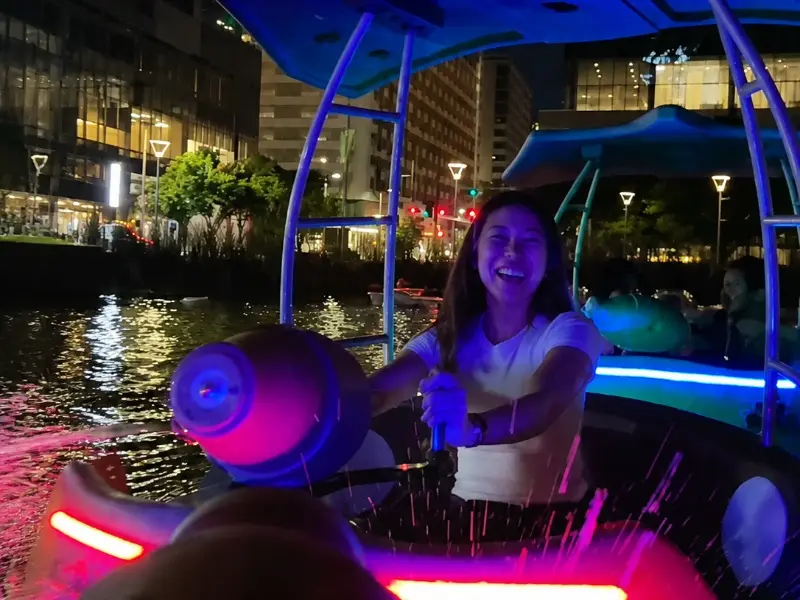
Houston Commercial Bumper Boat Case Study: How QIQU Turned a City Lake into a Viral Water Attraction
A deep commercial bumper boat case study from Houston, Texas. See how QIQU self-developed bumper boats became a viral urban water attraction at Discovery Green, gained coverage from local TV, newspaper, city guides, travel platforms and hotel event pages, generated 10M+ combined social media engagements, and proved real visitor demand in a U.S. park operation.
Read more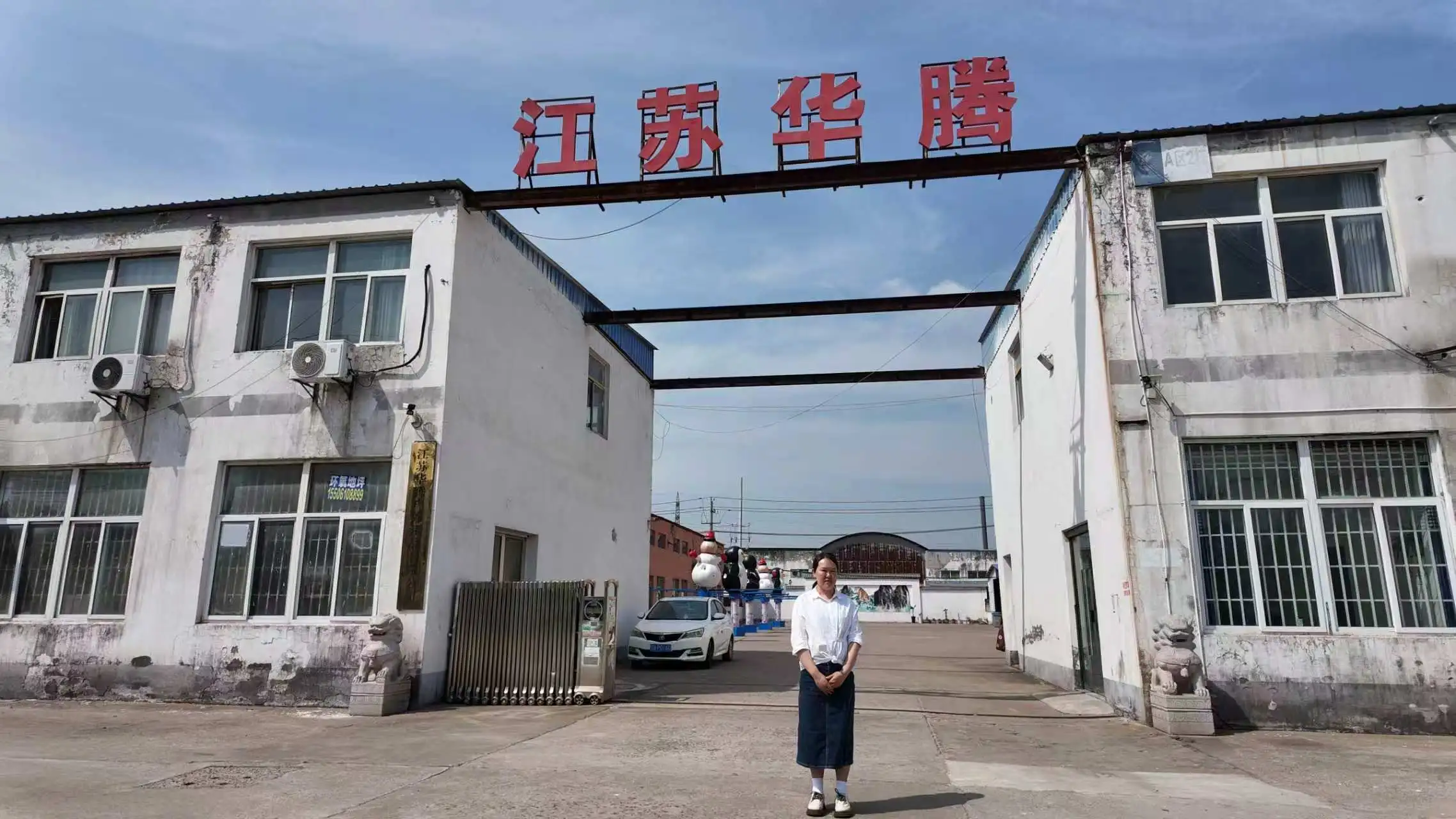
About QIQU: The Engineering Truth Behind How We Build Amusement Parks
QIQU is an amusement engineering company evolving from commercial inflatable systems to PE rotomolded park infrastructure. Built from real factory and park operations since 2012, we design amusement equipment based on real-world operational experience, not theory.
Read more