

Why QIQU Built Its Own 10.2-Acre Amusement Park
In 2024, QIQU began building and operating its own 10.2-acre amusement park in Yanghe New Area, Suqian, China. This case study explains why we moved from factory-only manufacturing into real park operation, and what the process taught us about ground preparation, drainage, equipment selection, installation quality and daily maintenance risk.
Emily
Founder of QIQU
From Factory Orders to Real Park Operation
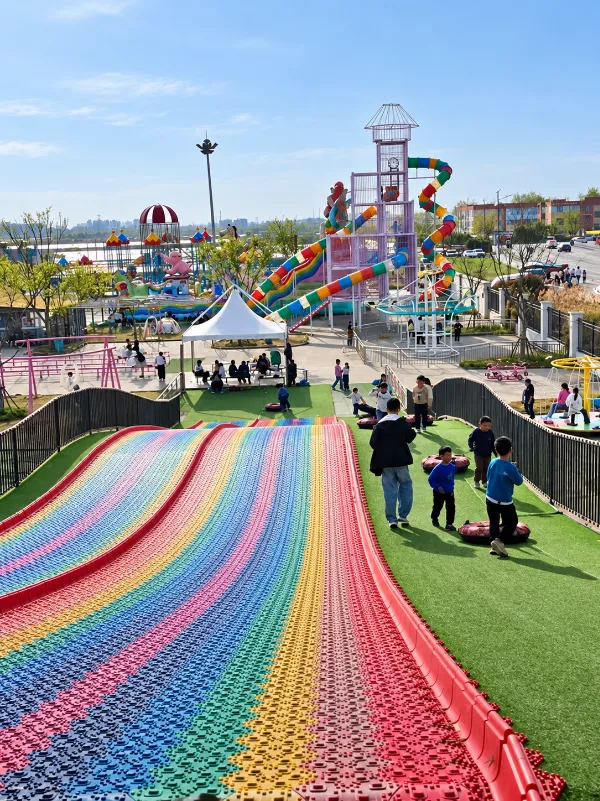
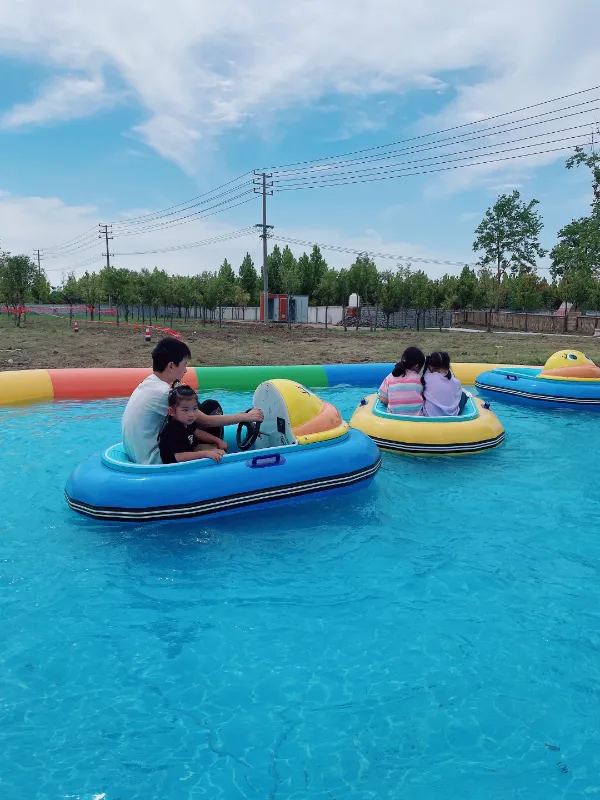 Taken at Siyang Zhuzhu Paradise on October 3, 2023.
QIQU has manufactured commercial amusement equipment since 2012. For many years, we looked at projects from the factory side: drawings, materials, production schedules, packing, shipping and installation support.
That changed after one project in 2023.
In July 2023, we received a large order for an outdoor non-powered amusement park project in Siyang, Suqian, Jiangsu. The project included attractions such as rope net play structures, rainbow slides, climbing equipment and other body-powered play systems. The park opened during China’s National Day holiday on October 1, 2023.
For that opening period, QIQU also joined the operation through several temporary attractions, including kids bumper boats, support-frame pools, inflatable pools, jeep rides and children’s small tanks. The cooperation was based on revenue sharing, so we were able to see real operating numbers, real visitor flow and real customer behavior.
Based on our revenue-sharing records, the project generated approximately RMB 50,000–60,000 (USD $7,000–8,500) in daily ticket revenue during the October 1-7 holiday period.
That result gave us two clear thoughts.
First, outdoor family entertainment still had strong earning potential when the right attractions were placed in the right market.
Second, if we wanted to serve amusement park buyers better, we needed to understand the business from the operator’s side, not only from the manufacturer’s side.
Why We Decided to Build QIQU Amusement Park
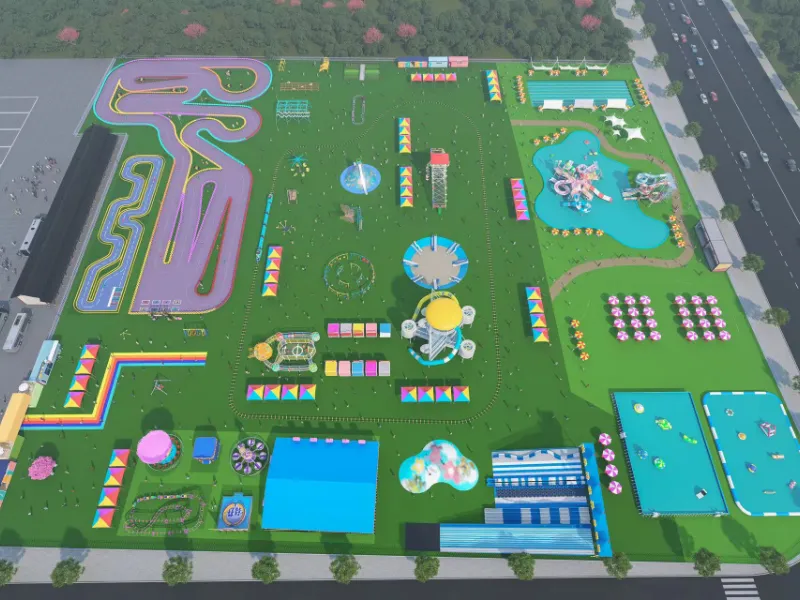 A pre-construction 3D master plan of our 10.2-acre park, designed entirely in-house by QIQU.
In January 2024, local representatives from Yanghe New Area in Suqian invited us to inspect a site near the Yanghe New Area railway station. The area did not yet have a large family amusement park, and the project matched the local need for outdoor leisure, children’s activities and weekend family traffic.
We signed the project in April 2024 and started work later that month.
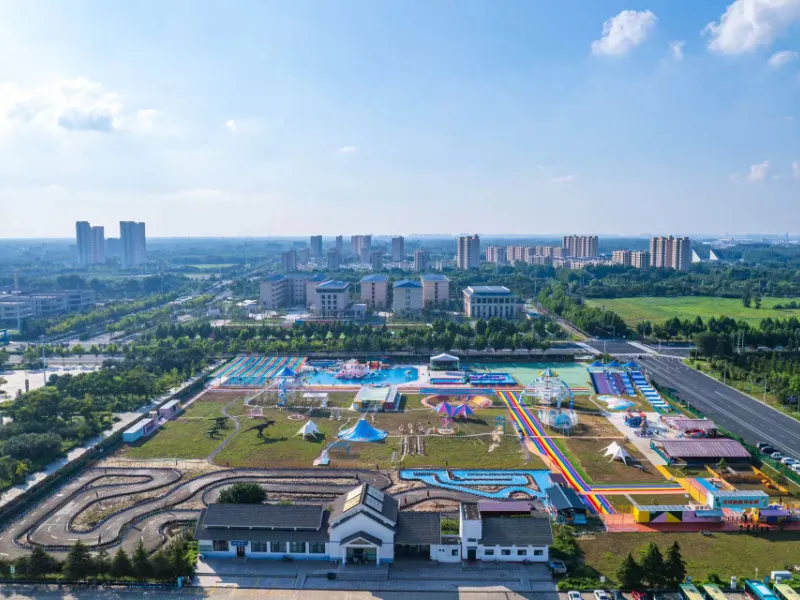
The park covers approximately 10.2 acres, or about 4.1 hectares. We use the name QIQU Fun Park because it connects directly with our manufacturing brand. The purpose is not to make QIQU look like a different company. It is to show buyers one thing clearly:
QIQU is not only a factory that ships equipment. We also operate attractions, handle maintenance, deal with weather, manage visitor complaints and understand what downtime means in a real park.
The First Lesson: Bad Ground Makes Good Equipment Look Bad
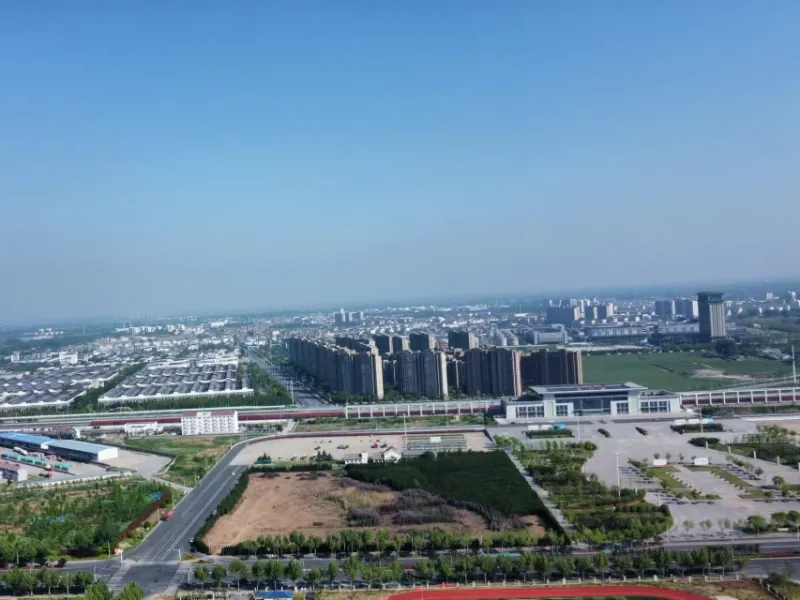 Aerial view of our 10.2-acre QIQU Amusement Park in Yanghe New District, taken in April 2024 during the initial land clearing phase.
The original site was not ready for amusement equipment. It was covered with dense pine trees and weeds. Some areas had pits, soft soil and standing water.
This mattered more than many new park investors realize.
Commercial amusement equipment does not perform well on weak ground. Inflatable attractions need clean, level and protected surfaces. Support-frame pools need stable foundations because water load is heavy. Karting tracks need consistent pavement. Visitor walkways need to stay usable after rain.
If the ground is wrong, the equipment takes the blame.
For QIQU amusement park, we first cleared the site, leveled the ground, added backfill and compacted it three times with a road roller. We also paid close attention to drainage because the site sat lower than the nearby road. The average difference was about 70 cm, and the lowest area was about 1.2 m below the road level.
That single condition changed many decisions.
We prepared drainage routes and kept several pumps on site because summer thunderstorms can bring heavy rain faster than natural drainage can remove it. This was not decorative construction. It was basic risk control.
About 7,000 Square Meters of Concrete Hardening
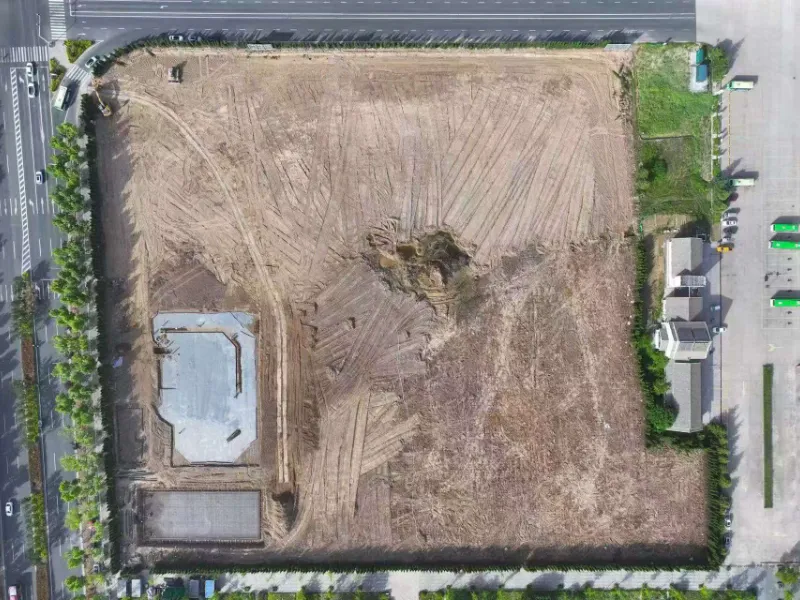
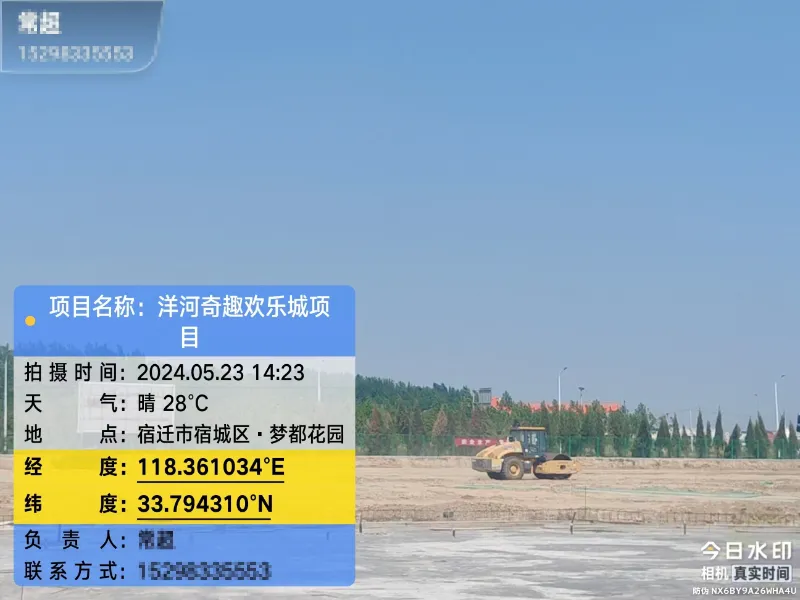
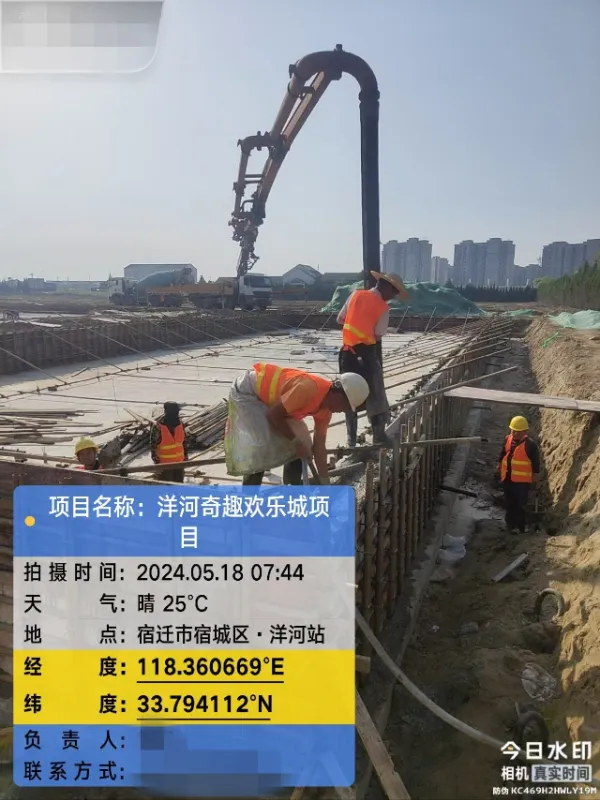 Personal contact details have been blurred on the timestamp to protect our site manager’s privacy.
We hardened around 7,000 square meters of ground, mainly in the entrance area, main roads, karting area, swimming pool area and water play zone.
This was not because concrete looks better in photos. It was because commercial operation needs predictable surfaces.
Concrete hardening helps with:
- safer visitor movement after rain
- cleaner water play areas
- easier equipment placement
- lower wear on inflatables and ground mats
- better access for delivery, installation and maintenance
- fewer muddy areas around high-traffic attractions
For the karting track, we first formed the track base with concrete and then added asphalt. Asphalt was used only for the karting area because it gives a better driving surface and visitor experience.
Why We Added Water Attractions and Mechanical Rides
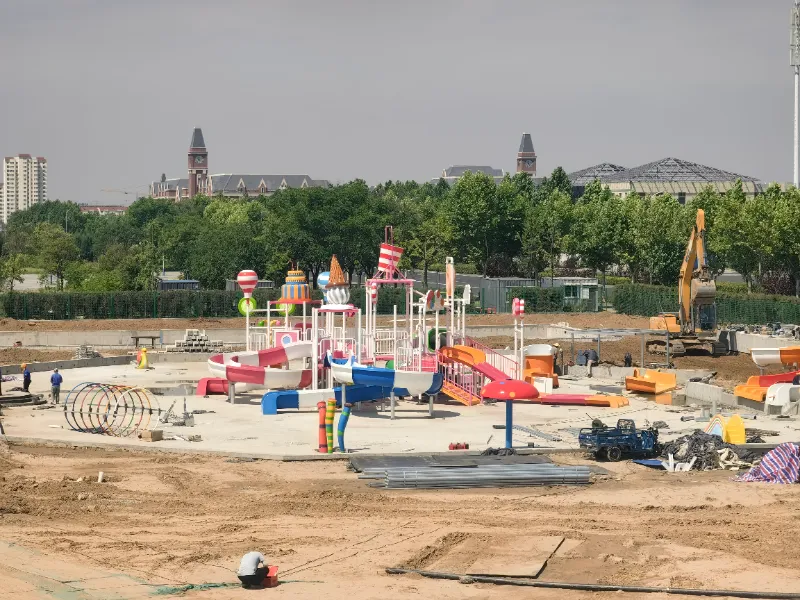
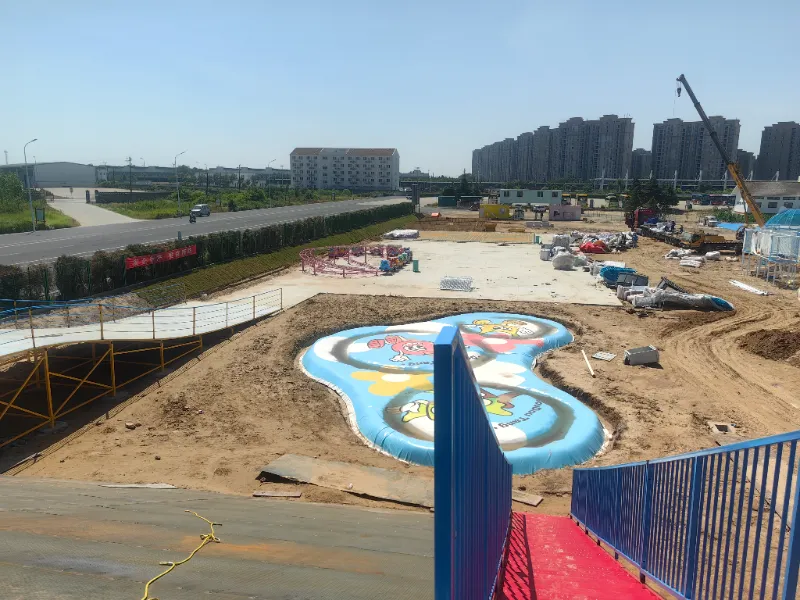 At the beginning, we wanted to build a non-powered amusement park only.
That plan changed.
Non-powered attractions are useful, especially for climbing, sliding, jumping and physical play. But the market had already become crowded. If a park only has non-powered equipment, it can easily look similar to many other family parks.
We needed stronger reasons for families to stay longer and come back.
That is why we added water attractions, karting and selected powered rides. QIQU amusement park now includes traditional powered attractions such as ground-grid bumper cars, self-control planes, a disco turntable, a children’s mini coaster, giraffe flying chairs, ball-spraying cars and a track train.
The park also includes more than 40 non-powered attractions, including rainbow slides, climbing structures, large play frames, bounce nets and physical challenge areas.
For summer operation, we added a water world area with an adult swimming pool, a large children’s water play pool and a foam pool.
The logic was simple: in hot weather, water attractions bring traffic. Children want to play in water, parents stay longer, and the park has more room to design events, competitions and repeat visits.
The Expensive Lesson from Third-Party Equipment
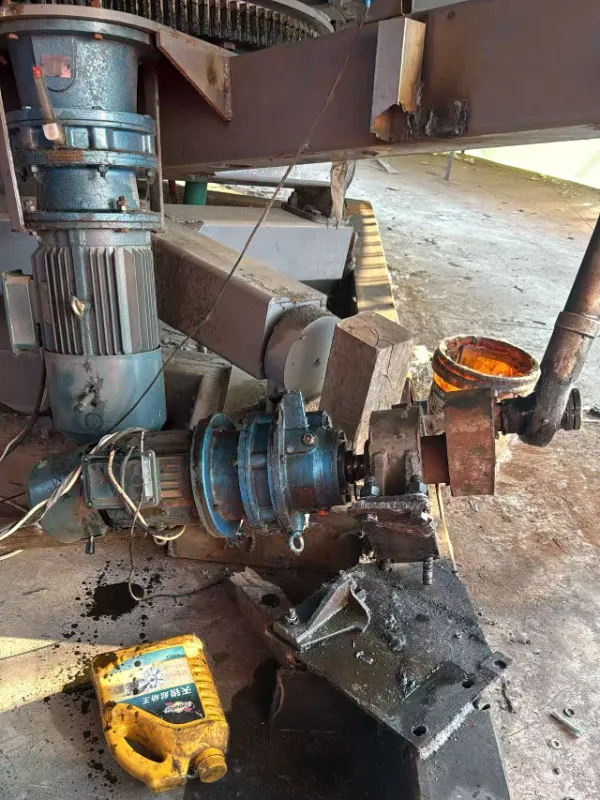 The drive axle on a third-party disco ride snapped during operation at our park.
Because QIQU was busy with several large factory orders at the time, we sourced some rides and attractions from outside suppliers, with installation arranged by them.
This gave us one of the most useful lessons of the whole project.
Even an experienced amusement equipment manufacturer can suffer when third-party product quality, installation discipline and after-sales response are not stable. Some equipment broke more often than expected. Some installation teams did not work to the standard we needed. When visitors complain, the operator cannot explain that the problem came from another supplier. The park owner still has to solve it.
That experience changed how we talk to buyers.
A low purchase price is not low if the equipment creates repair work, visitor complaints and lost operating time. For commercial amusement equipment, the real cost is not only the invoice. It is the cost of downtime.
Why This Matters for Equipment Buyers
Many buyers ask us about product price first. That is understandable.
But after building and operating our own park, we now pay more attention to earlier questions:
- Is the ground ready for the equipment?
- Will rainwater drain fast enough?
- Is the attraction suitable for the target age group?
- Can the site handle visitor queues?
- Is there enough space for safety, maintenance and movement?
- Can the operator repair common issues quickly?
- Will the equipment still look attractive after weeks of daily use?
These questions directly affect revenue.
A commercial ride is not just a product. It is part of an operating system. Site preparation, visitor flow, safety space, power supply, water management, spare parts and staff routines all decide whether the equipment helps the park make money or becomes a daily problem.
Trial Opening and Official Opening
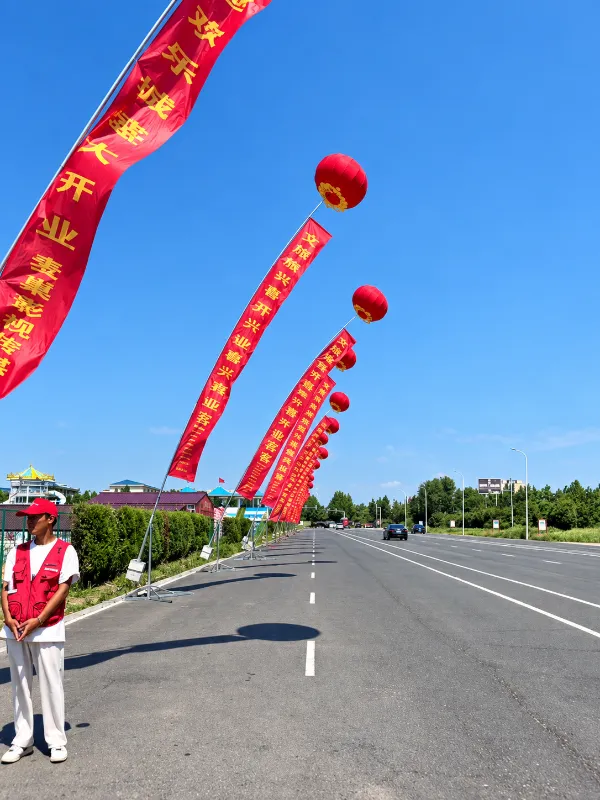
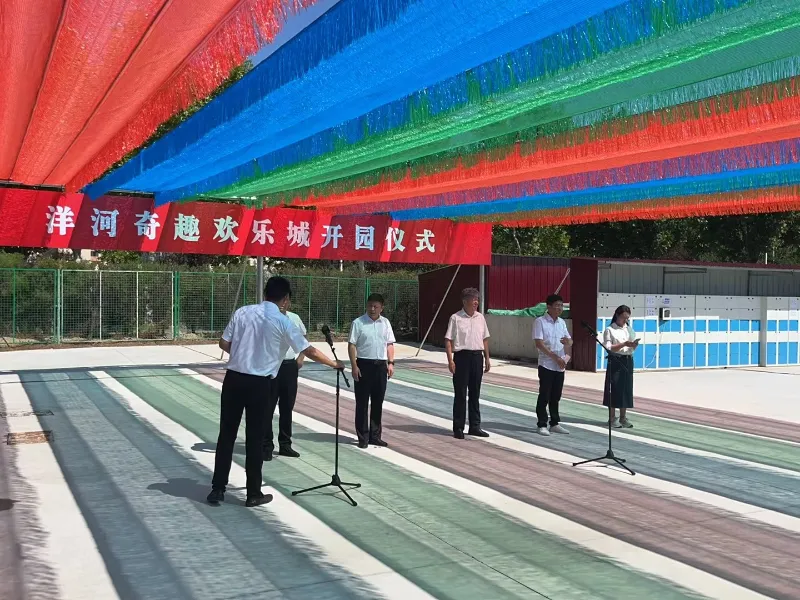 QIQU amusement park began trial operation on July 9, 2024. The official opening was held on July 31, 2024, after the local schedule was confirmed.
The opening ceremony was attended by local Yanghe New Area representatives because the project also filled a gap in local family entertainment facilities.
For us, the value of this park is not only public attention. The real value is that we now have a place where our team can observe how equipment behaves under real operation: heat, rain, crowds, queues, maintenance, cleaning, electricity, water use and visitor feedback.
What We Can Share With Serious Buyers
We keep photos and videos from the construction process, including land clearing, ground leveling, concrete hardening, drainage preparation, equipment installation and daily operation.
If you are planning a family entertainment park, temporary water park, support-frame pool project or outdoor amusement site, you can send us your site size, ground condition, visitor age group and target opening date.
We can help you evaluate which attractions make sense before you spend money on equipment.
Frequently Asked Questions
Everything you need to know about this product. Can’t find what you’re looking for? Contact our team.
- QIQU built its own park to understand commercial operation from the buyer’s side. Manufacturing tells us how equipment is made. Operation tells us what happens after opening: visitor flow, weather, maintenance, downtime, staff pressure and real revenue risk.
- No. The article should clearly position QIQU as a commercial amusement equipment manufacturer with real park operation experience. The park is proof of field experience, not a separate business direction for SEO.
- Site preparation comes before equipment. Soft soil, poor drainage, uneven ground and muddy access can damage equipment, slow installation and create visitor complaints. Good equipment cannot solve a bad site.
- Outdoor parks often face heavy summer rain. If water cannot drain quickly, inflatable attractions, support-frame pools, walkways and electrical areas become harder to operate safely. Drainage affects uptime, maintenance cost and visitor experience.
- Non-powered attractions are useful, but many parks already have them. In summer, water attractions create stronger visitor pull, longer stay time and more event possibilities. This is why QIQU added swimming pools, water play areas and related summer attractions.
- Buyers should prepare the site size, ground condition, drainage situation, target visitor group, local weather conditions, opening date and power/water availability. These details help avoid buying equipment that does not match the site.
- Yes. QIQU keeps photos and videos from site clearing, ground preparation, concrete hardening, drainage work, equipment installation and real operation. Serious buyers can request supporting materials when discussing a project.
Ready to Apply These Strategies?
Get a custom ROI projection and layout plan for your specific project.
Request a Free ConsultationRelated Articles
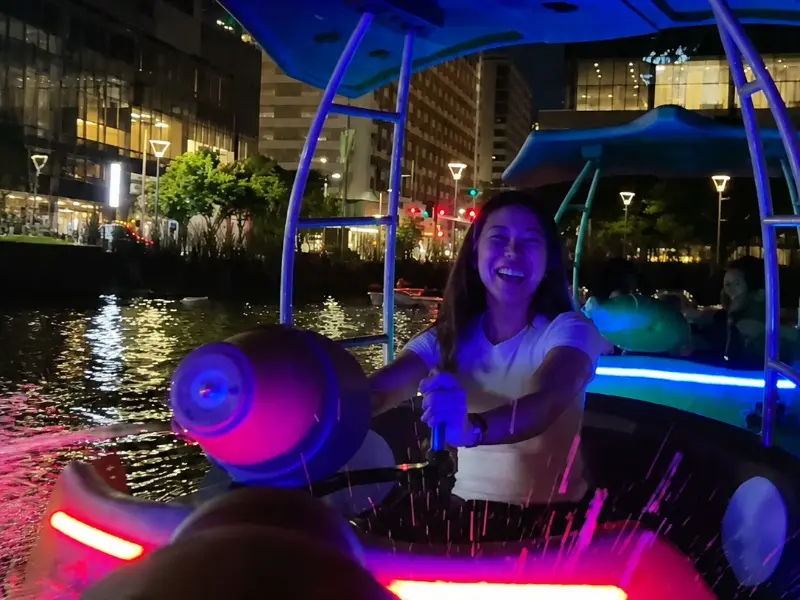
Houston Commercial Bumper Boat Case Study: How QIQU Turned a City Lake into a Viral Water Attraction
A deep commercial bumper boat case study from Houston, Texas. See how QIQU self-developed bumper boats became a viral urban water attraction at Discovery Green, gained coverage from local TV, newspaper, city guides, travel platforms and hotel event pages, generated 10M+ combined social media engagements, and proved real visitor demand in a U.S. park operation.
Read more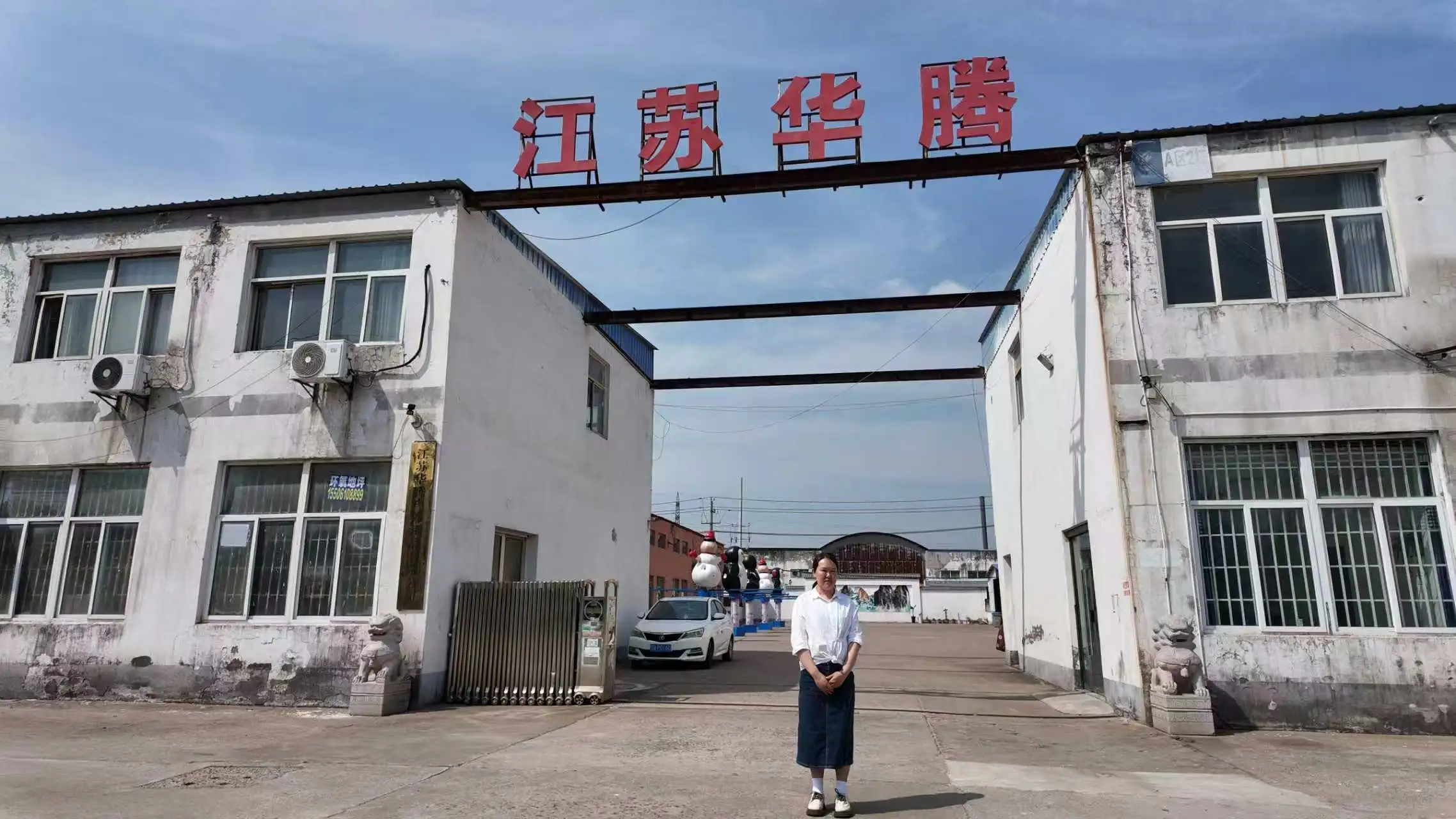
About QIQU: The Engineering Truth Behind How We Build Amusement Parks
QIQU is an amusement engineering company evolving from commercial inflatable systems to PE rotomolded park infrastructure. Built from real factory and park operations since 2012, we design amusement equipment based on real-world operational experience, not theory.
Read more