

30 × 15 m Custom Commercial Inflatable Castle for a Chilean Customer
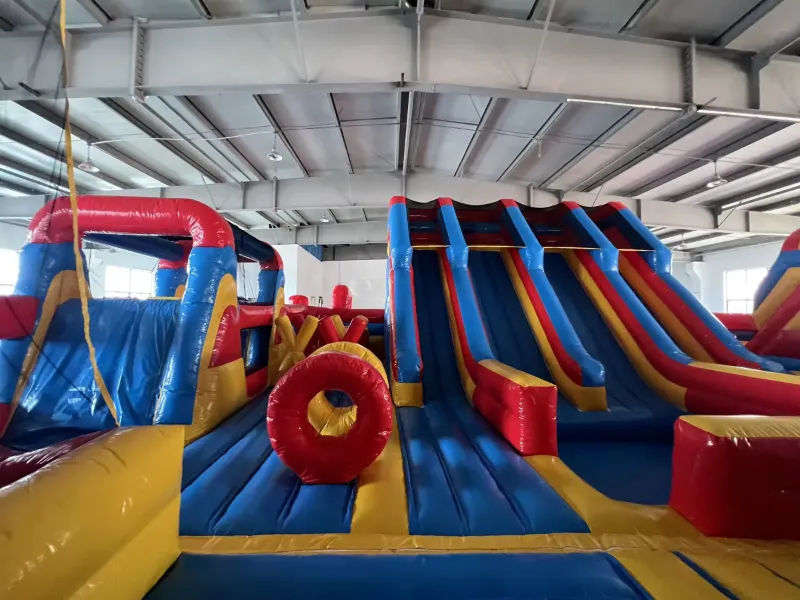
After an earlier purchase of six standard commercial PE bumper cars, a customer in Chile ordered a custom 30 × 15 × 6.2 m (98.4 × 49.2 × 20.3 ft) commercial inflatable castle from QIQU. The design was refined through several rounds of 3D revisions before production. Built with 0.55 mm (0.022 in) commercial-grade PVC tarpaulin, the structure underwent factory inspection and testing before shipment. It arrived at port on August 15, 2026, and was delivered to the customer on August 19.
Emily
Founder of QIQU
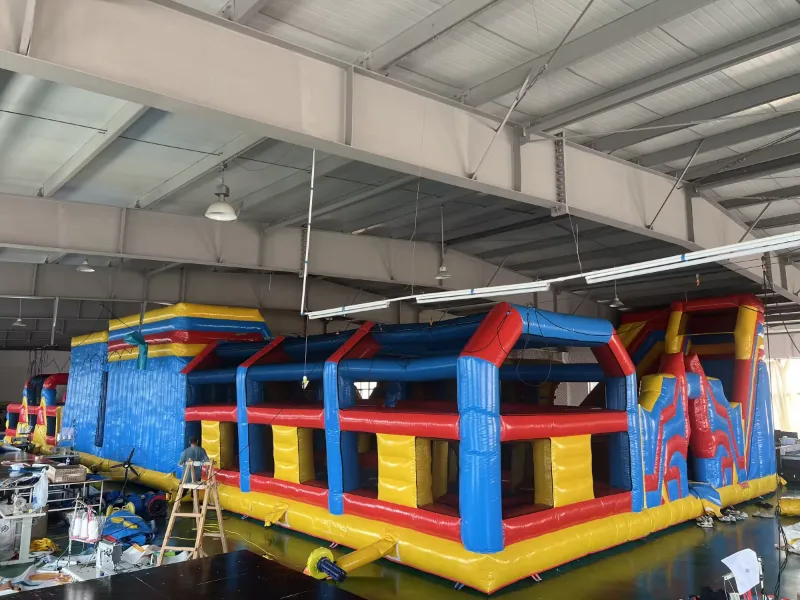
In 2026, a customer in Chile who had previously purchased six standard commercial PE bumper cars from QIQU returned with a different project: a large custom commercial inflatable castle measuring 30 × 15 × 6.2 m (98.4 × 49.2 × 20.3 ft).
Unlike the earlier bumper car order, this project focused on creating a large, connected inflatable play structure with multiple slides, climbing features and obstacle areas. The customer had a clear idea of the attraction they wanted, but the final design needed several revisions before production could begin.
This project shows how QIQU works with customers to refine a large inflatable concept, confirm the layout in 3D, manufacture the structure and complete factory inspections before international shipment.
From a Previous Bumper Car Order to a New Inflatable Project
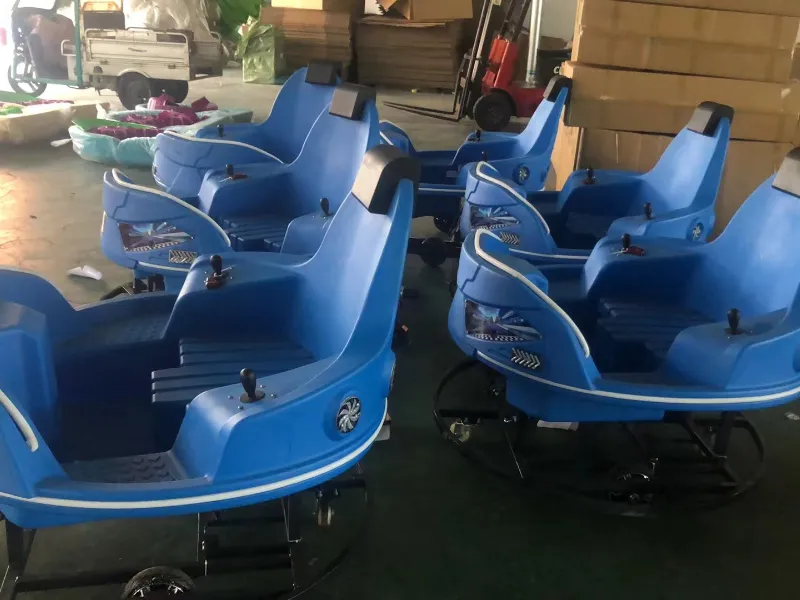 The customer's first purchase from QIQU was an order for six standard commercial PE bumper cars. The vehicles were supplied in the standard configuration, without custom modifications.
After the bumper cars had been delivered, the customer contacted us again in May 2026 to discuss a much larger inflatable attraction for their own project in Chile.
The new order was independent of the bumper car purchase and required a different design and manufacturing process. Instead of selecting a standard inflatable unit, the customer wanted a large play structure with several interconnected activity areas.
For buyers interested in QIQU's earlier product category, our commercial PE bumper cars page provides further product information.
Designing a 30 × 15 m Commercial Inflatable Castle
The customer initially considered a footprint of 30 × 20 m (98.4 × 65.6 ft). After reviewing the available budget, they selected a more compact footprint of 30 × 15 m (98.4 × 49.2 ft).
The final design measured:
-
Overall footprint: 30 × 15 m (98.4 × 49.2 ft)
-
Maximum height: 6.2 m (20.3 ft)
-
Slides: Three
-
Structure: One connected, continuously inflated play structure
-
Play features: Climbing sections, slides and multiple obstacle and activity areas
The entrance and exit were positioned at the same location according to the approved layout. This arrangement formed part of the customer's preferred design rather than being imposed by a standard product configuration.
For a structure of this scale, the overall dimensions are only one part of the design. The location of each play feature, the connections between sections, the climbing areas and the slide layout must also be coordinated before manufacturing.
Buyers considering other customizable inflatable layouts can explore QIQU's custom commercial inflatable bounce house combos. That product page explains options for themes, slides, game features and layout customization across different commercial projects.
Several 3D Design Revisions Before Production
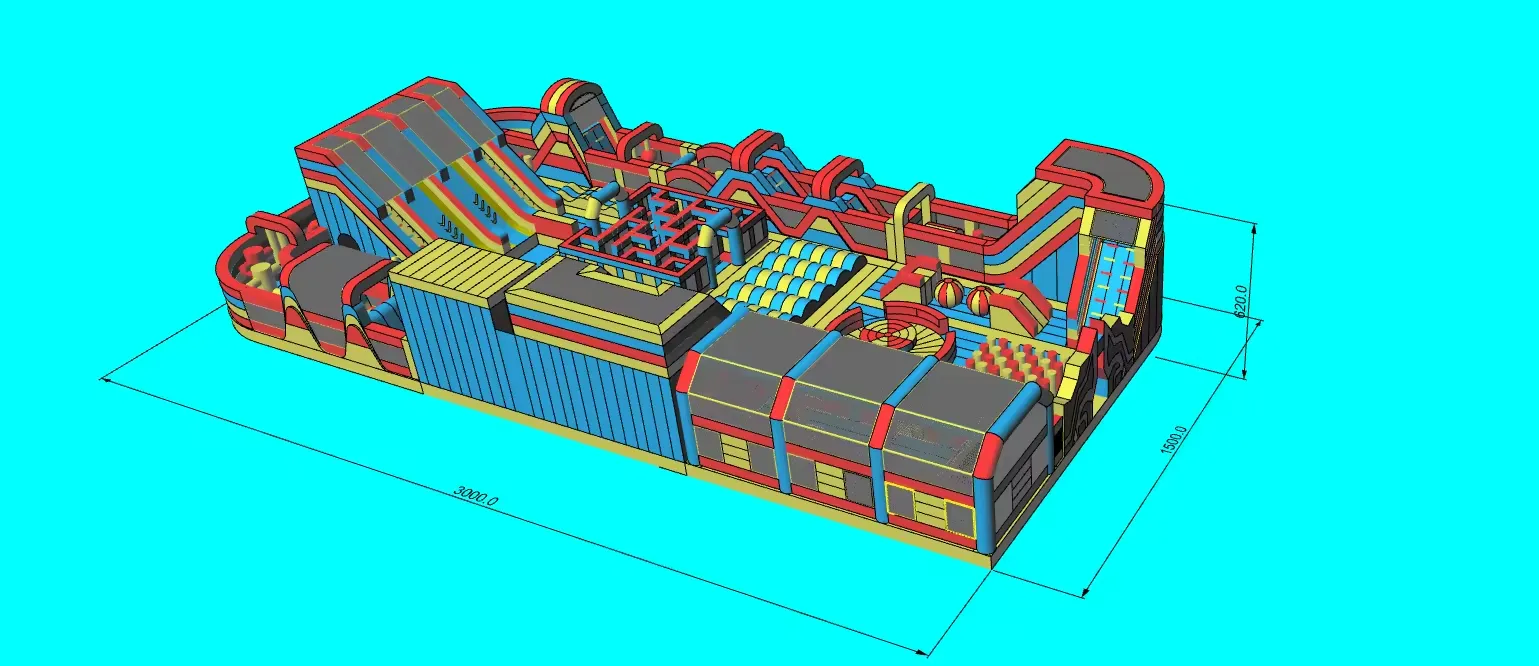 The customer began discussing the inflatable castle with QIQU on May 10, 2026, and paid the deposit on May 15.
We used the customer's ideas and reference images to develop the initial concept. After reviewing the design, the customer requested changes to specific functional areas rather than simply changing the exterior appearance.
One section originally shown in the design was requested to become a climbing wall. The customer subsequently asked for additional arch-shaped supports on both sides of the covered area.
Our designer revised the 3D layout to reflect these requirements, allowing the customer to review the proposed changes before manufacturing.
The final 3D design was approved on May 28, 2026. Production began the following day, on May 29.
This sequence was important because changes to a large integrated inflatable can affect more than its appearance. Climbing features, slide positions, internal partitions and supporting structures all need to be considered together. Confirming these details before production helps reduce the risk of manufacturing a structure that does not match the approved concept.
Commercial PVC Material and Reinforced Construction
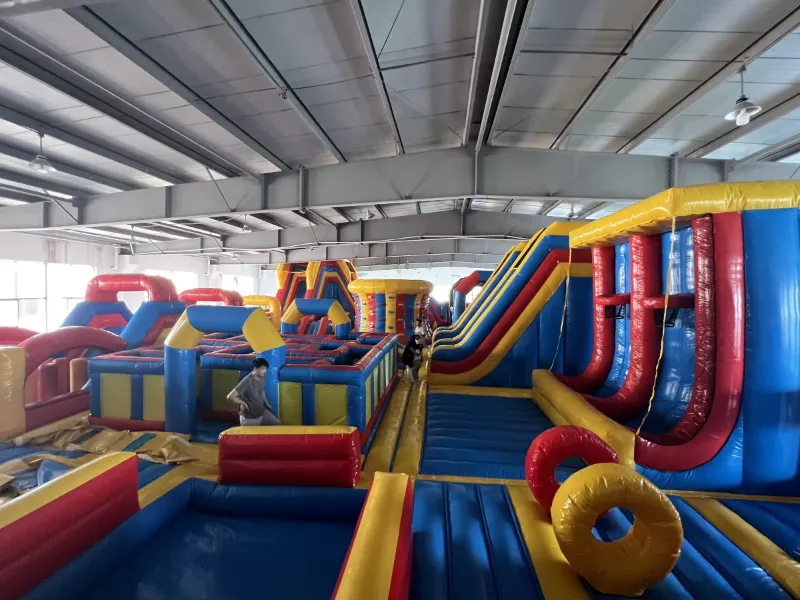 The inflatable castle was manufactured using 0.55 mm (approximately 0.022 in) Sijia commercial-grade PVC tarpaulin.
High-frequency heat welding was the primary joining process. Reinforcement was provided at areas subject to concentrated loads, repeated contact or greater wear, including:
-
Climbing sections
-
Slide landing areas
-
Connection seams
-
The base
-
Load-bearing and anchoring points
The structure uses continuous inflation during operation. Its blower configuration was determined according to the size and airflow requirements of the finished design.
The order included six required blowers and one additional blower. The supplied units included 900 W and 1,100 W models.
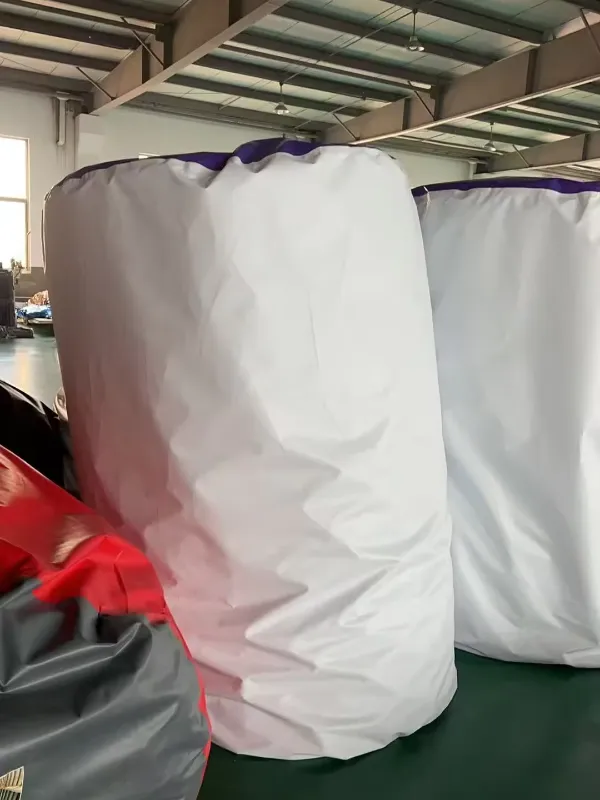
The standard accessories included a repair kit, storage bag and instruction manual, helping the customer prepare for subsequent handling and maintenance.
Factory Inflation and Quality Inspection
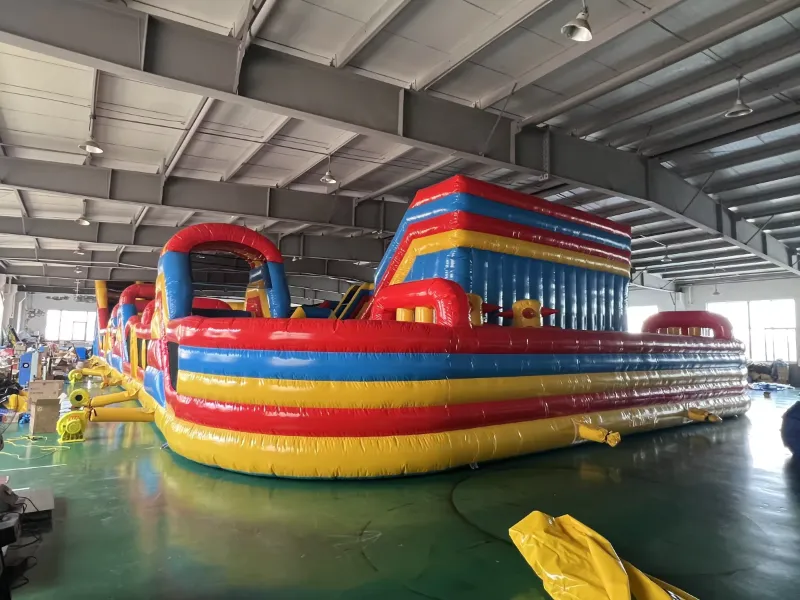
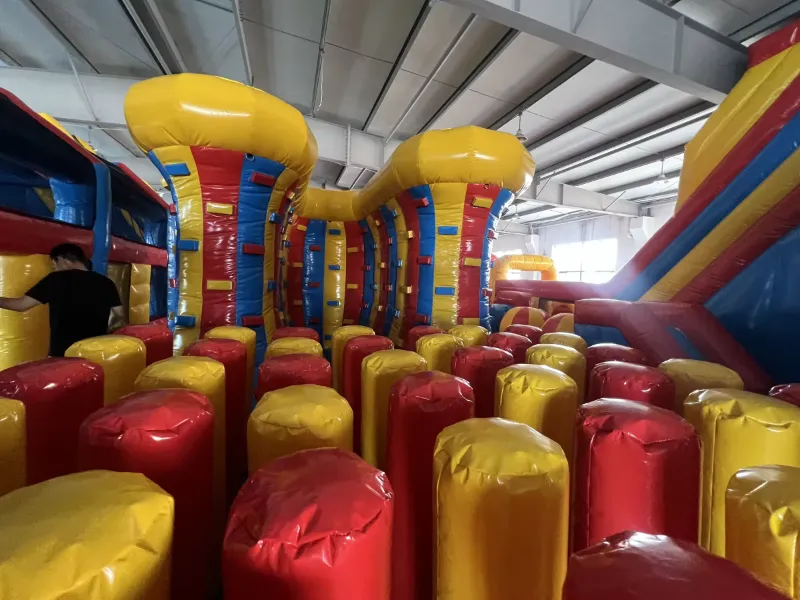
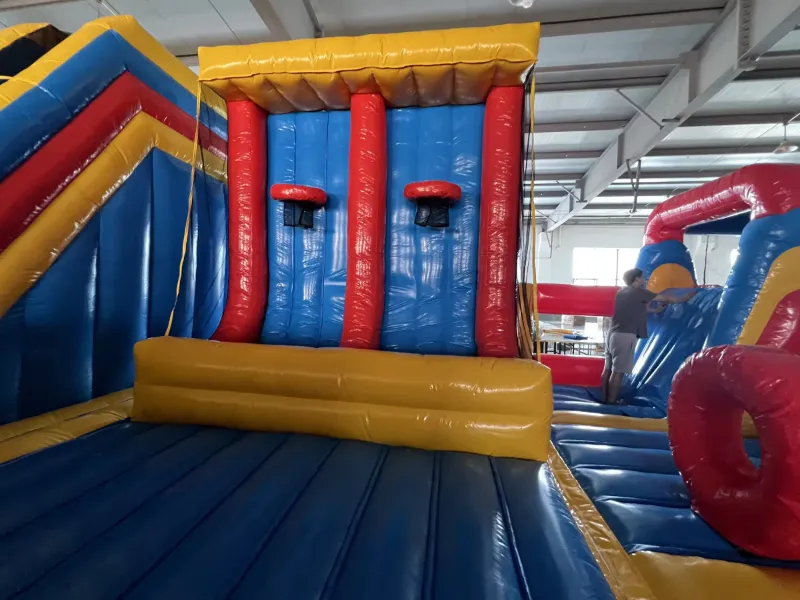
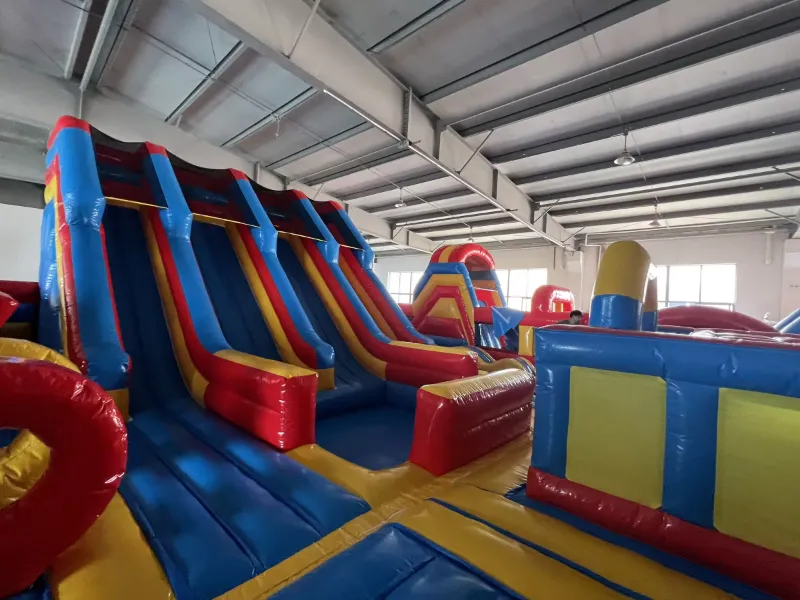 The inflatable castle was completed on June 28, 2026.
Before shipment, QIQU carried out inflation and functional inspections covering the overall appearance, dimensions, seams, air leakage, blower operation and the product's functional features.
These checks were intended to confirm that the manufactured structure matched the approved design and that the main components were functioning as expected before packing.
We also provided photos and videos of the completed product to the customer for confirmation before arranging shipment.
For a large custom inflatable, this stage is important because the customer is purchasing a complete configuration rather than a single standard module. Reviewing the inflated structure makes it easier to inspect the overall shape, the arrangement of play features and the relationship between connected sections before the product leaves the factory.
Packaging and Shipment to Chile
 After inspection and customer confirmation, the order was prepared for export.
The shipment comprised four pallets, seven blower cartons and one battery package, with a total cargo volume of approximately 15.5 m³ (547 ft³).
The shipping timeline was as follows:
-
June 28, 2026: Production completed.
-
July 13, 2026: Goods handed over to the customer's nominated freight forwarder.
-
July 23, 2026: Customs procedures completed and sea transportation commenced.
-
August 15, 2026: Shipment arrived at port.
-
August 19, 2026: Goods delivered to the customer.
The freight notice had initially indicated an estimated arrival date of August 22. The shipment actually arrived at port on August 15, seven days earlier than that estimate, and was delivered to the customer four days later.
The customer handled the installation independently. This case therefore documents the design, manufacturing, factory inspection and delivery process without making unverified claims about on-site installation or operating performance.
What This Project Shows About Custom Inflatable Manufacturing
 The Chile project demonstrates how a large commercial inflatable can be developed around a customer's available budget, preferred play features and required dimensions.
The final structure was not selected from a fixed catalogue configuration. Its footprint was adjusted from the initial proposal, and the climbing area and arch-shaped supports were revised during the design stage before the final drawing was approved.
For QIQU, the manufacturing process involved more than producing the exterior shape. Material selection, reinforcement, welded connections, blower configuration, inflation checks and shipment preparation all formed part of delivering the finished product.
For buyers planning a similar project, it is useful to prepare the following information before requesting a quotation:
-
Available installation space and target dimensions
-
Preferred slides, climbing features and obstacle areas
-
Reference photos or an initial concept
-
Intended use and destination country
-
Budget range and preferred configuration
These details help the design team evaluate the proposed layout and develop a more practical solution before production begins.
Planning a Custom Commercial Inflatable Castle?
Every large inflatable project has different space requirements, functional priorities and budget limits. QIQU works with commercial buyers to develop custom inflatable play structures, confirm designs before production and inspect completed products before shipment.
If you are planning a large inflatable castle or a custom commercial play attraction, share your available space, target dimensions, preferred features and reference images with our team.
We can review your requirements and discuss a project-specific design for your market.
Frequently Asked Questions
Everything you need to know about this product. Can’t find what you’re looking for? Contact our team.
- The completed inflatable castle measures 30 × 15 × 6.2 m, approximately 98.4 × 49.2 × 20.3 ft. The 6.2 m (20.3 ft) measurement represents its maximum height.
- The custom design includes three slides and multiple play areas with climbing and obstacle features. The final configuration was confirmed through 3D design revisions before production.
- The structure was made from 0.55 mm (approximately 0.022 in) Sijia commercial-grade PVC tarpaulin. High-frequency heat welding was the primary joining method, with reinforcement at areas such as climbing sections, slide landing zones, seams, the base and load-bearing attachment points.
- The order included six required blowers and one additional blower. The supplied blower models included 900 W and 1,100 W units, with the configuration matched to the structure.
- QIQU checked the overall appearance, dimensions, seams, air leakage, blower operation and functional features. The completed product was inflated and inspected, and photos and videos were provided to the customer for confirmation before shipment.
- The final 3D design was approved on May 28, 2026, and production began on May 29. The inflatable castle was completed on June 28, handed over to the freight forwarder on July 13, and arrived at port on August 15. It was delivered to the customer on August 19, 2026.
Ready to Apply These Strategies?
Get a custom ROI projection and layout plan for your specific project.
Request a Free ConsultationRelated Articles
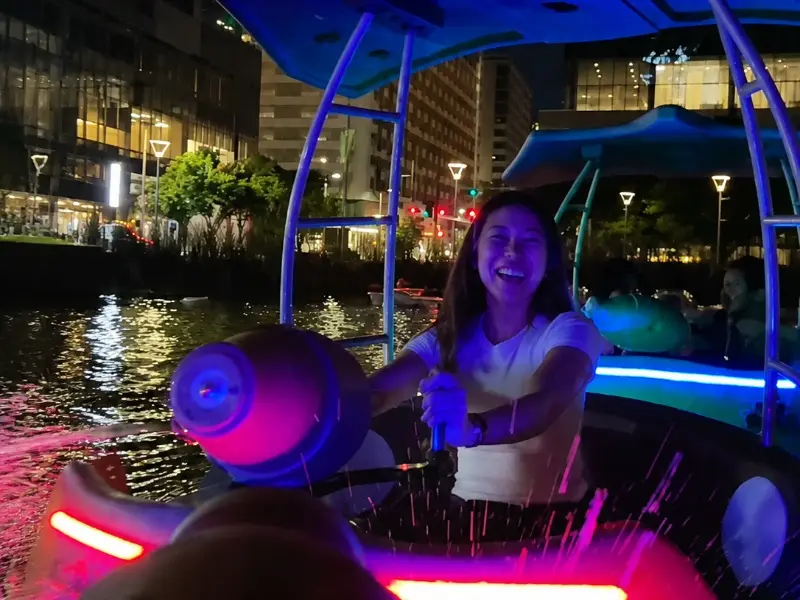
Houston Commercial Bumper Boat Case Study: How QIQU Turned a City Lake into a Viral Water Attraction
A deep commercial bumper boat case study from Houston, Texas. See how QIQU self-developed bumper boats became a viral urban water attraction at Discovery Green, gained coverage from local TV, newspaper, city guides, travel platforms and hotel event pages, generated 10M+ combined social media engagements, and proved real visitor demand in a U.S. park operation.
Read more
About QIQU: The Engineering Truth Behind How We Build Amusement Parks
QIQU is an amusement engineering company evolving from commercial inflatable systems to PE rotomolded park infrastructure. Built from real factory and park operations since 2012, we design amusement equipment based on real-world operational experience, not theory.
Read more